

What Is Centralized Delivery Management (and the Tools You Need to Run It)?


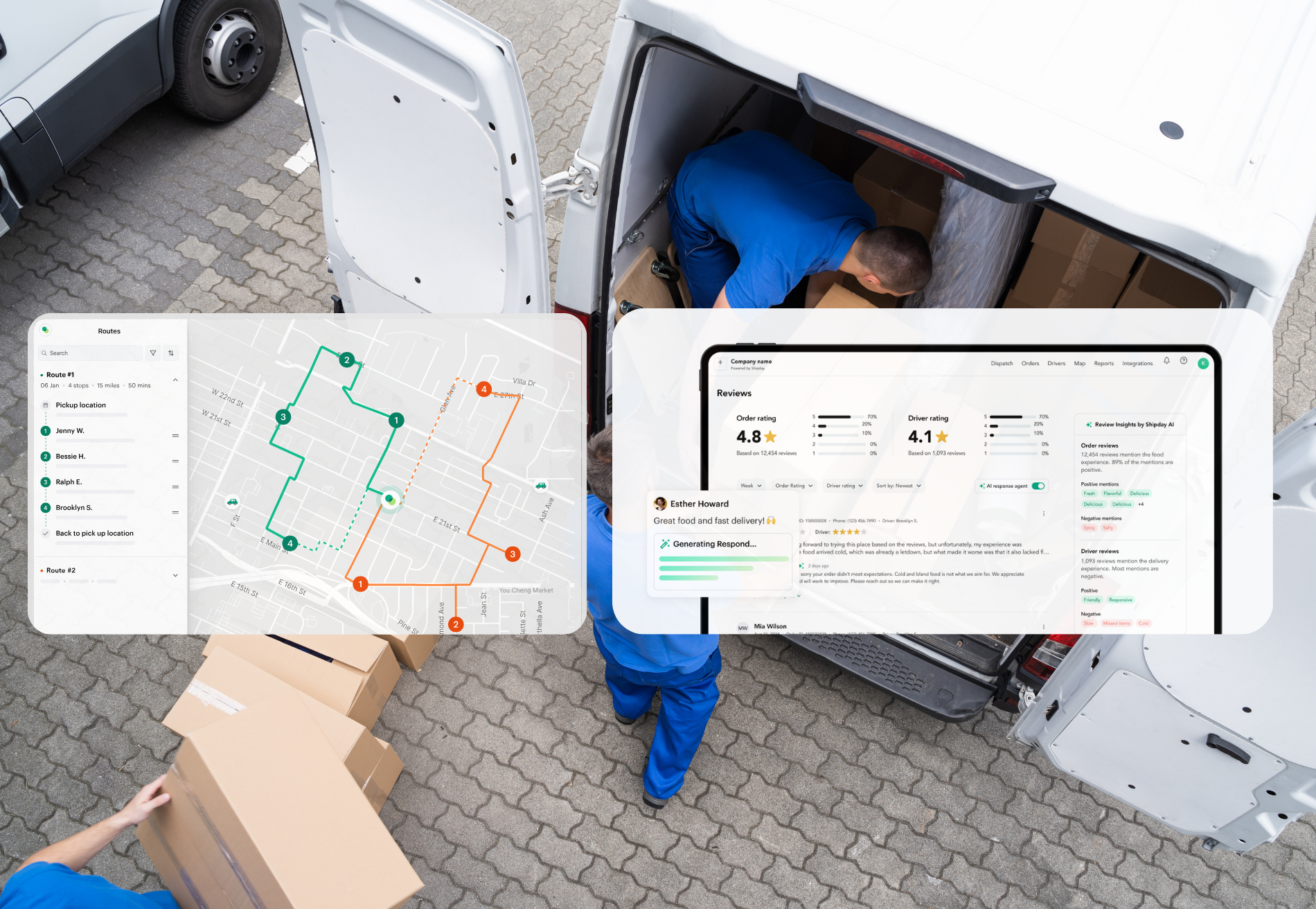
When a delivery operation goes wrong, the impulse may be to blame the driver or the route taken. But in all likelihood, scattered information is the culprit. Orders come in through a third-party app, a dispatcher assigns drivers over the phone, and tracking lives in a separate tool. When a customer doesn’t get an update, they call with questions. It’s a patchwork of apps, spreadsheets, phone calls, and texts that seldom come together effectively.
There’s a better way.
Centralized delivery management is the practice of managing all deliveries (in-house and third-party) from a single platform. It lets you manage deliveries in one place: a single hub where orders come in, drivers are dispatched, customers are notified, and managers see what is happening in near real-time.
It sounds simple—and it is—once you’re there. It’s getting there that is not so simple. Centralization only works when the platform actually covers the entire job. A system that handles dispatch but not customer communications is not centralized — it’s just a different patchwork solution.
What does centralized actually mean?
Centralized delivery management means a single system handles every cog in the delivery operation: order intake, driver assignment, route optimization, customer notifications, proof of delivery, and performance reporting. In-house drivers and third-party couriers use the same dashboard, and a second or third location does not require a separate tool or login.
The alternative is a fragmented system, and it's what most operations are actually running. Orders arrive in a POS. A dispatcher reads them and calls or texts a driver. Tracking is either nonexistent or lives in a separate app. And when something goes wrong — a late delivery, a wrong address, a driver who does not pick up — there is no single place to see what happened. It’s that patchwork that we were talking about.
Take a multi-location restaurant group running delivery out of three kitchens. Each location dispatches its own drivers. One uses a delivery app’s built-in tools; another relies on a dispatcher with a phone and a whiteboard; and the third splits orders between an in-house driver and a third-party courier, with no visibility into either. A regional manager trying to see how delivery is performing across all three locations has to call each one and ask—because there is no shared view, no consistent customer experience, and no way to spot a problem at one location before it shows up in a review.
That's what fragmentation actually looks like. Not one big failure, but dozens of cogs that are slightly out of place. Centralization is the fix, but it’s important to understand where things go wrong.
Why communication breaks first
Communication is the first cog that slips in a fragmented operation.
It’s a dispatcher who assigns drivers by phone, but has no record of the assignment. A driver who updates status by text creates information that lives on one person’s phone. A customer without a tracking link has only one option: call and ask. A manager who wants to know where things stand has to go find out, because nothing surfaces on its own.
Centralized delivery management lives or dies on automated and unified communication. Drivers get assignments through an app, not a text. Customers receive a tracking link the moment an order is dispatched and a notification when the driver is nearby. Dispatchers see driver status in real time instead of chasing it down. Every update flows through a single system, creating a single source of truth.
None of that is possible when people are the sole communication layer. A dispatcher juggling phone calls under pressure cannot also be a reliable record-keeper. Automate the relay, and the dispatcher is free to handle the next order instead of explaining the status of the last one.
What AI actually does in a centralized platform
A centralized system that requires manual decisions at every step is not much better than a spreadsheet with a slicker interface. AI is what turns a central platform from a dashboard into something that acts.
Auto-dispatch uses AI to assign orders to the right driver automatically, based on location, capacity, and route efficiency — without a dispatcher making that call for each order individually. The system looks at which drivers are nearby, how many stops they already have, and what sequence makes sense, then assigns the order automatically.
Route optimization calculates the most efficient sequence of stops in real time, accounting for traffic, delivery windows, and driver location, and adjusts on the fly when a new order comes in or a driver gets delayed. Predictive ETAs give customers an accurate arrival window rather than a guess, using live location and route data instead of a fixed estimate set when the order was placed. Automation handles the repetitive decisions — re-routing when a driver falls behind, flagging exceptions before they become problems — so the operation runs without constant manual intervention.
The practical result is that one platform can handle significantly more volume than a manually managed operation with the same number of people. We're not talking about a chatbot feature here—AI is what makes a centralized platform actually work, not just a dashboard with a nicer interface. Without it, a growing delivery operation eventually hits the ceiling where volume outpaces capacity, and you keep adding staff.
Why a platform with gaps isn’t really centralized
This is what falls through the cracks during some software evaluations. A platform can have excellent route optimization and mediocre proof of delivery. Another can have strong customer notifications and no analytics. And every gap in the feature offering is a place where the operation has to stitch in another tool, which is exactly the problem centralization is supposed to solve.
Centralization only works when one platform truly covers the entire job: dispatch and driver assignment, route optimization, real-time tracking, customer communications and notifications, proof of delivery, integrations with the order management and POS systems the business already uses, and reporting that shows what is actually happening across the operation. Miss a piece, and the side door is where things go wrong first. Proof of delivery handled outside the platform means a customer dispute with no record attached to the order. Analytics handled in a spreadsheet means a manager finds out about a problem a week after it starts, instead of the day it starts.
The six capabilities a centralized delivery platform needs
To centralize delivery operations without leaving gaps, a platform must cover the entire job. Here is what to look for in a centralized delivery management platform — and where Shipday fits for SMB and local delivery operations.
- Dispatch and driver management. The core question is whether orders are assigned automatically based on driver location, capacity, and current route load, or whether a person is still making that call manually for every order. A driver app should receive assignments and report status without a phone call, and it should work the same way for both in-house and third-party drivers, so a dispatcher never has to manage two systems to run one operation.
- Route optimization. Static routes are calculated once and followed regardless of changes; they're an early guess. Real routing accounts for traffic, delivery windows, and driver location as they exist right now, and it recalculates the moment something shifts: a driver falls behind, a new order needs to fit into an existing route, or a delivery window tightens.
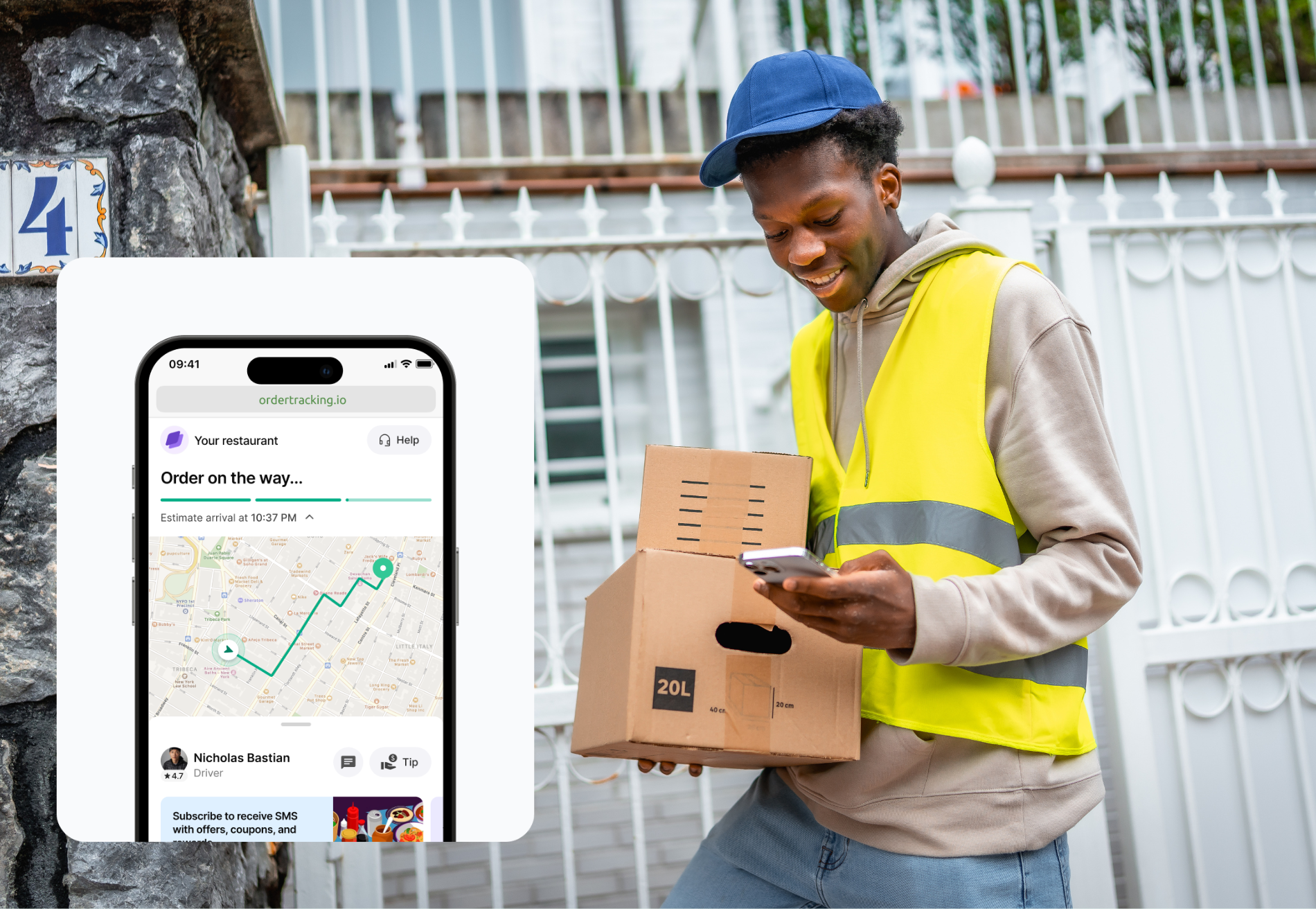
- Customer communications. Notifications at dispatch, pickup, and delivery should go out without anyone needing to remember to send them, and tracking links should update as the driver actually moves rather than showing a static estimate set when the order was placed. The payoff shows up in the inbound call volume: fewer customers calling to ask where their order is.
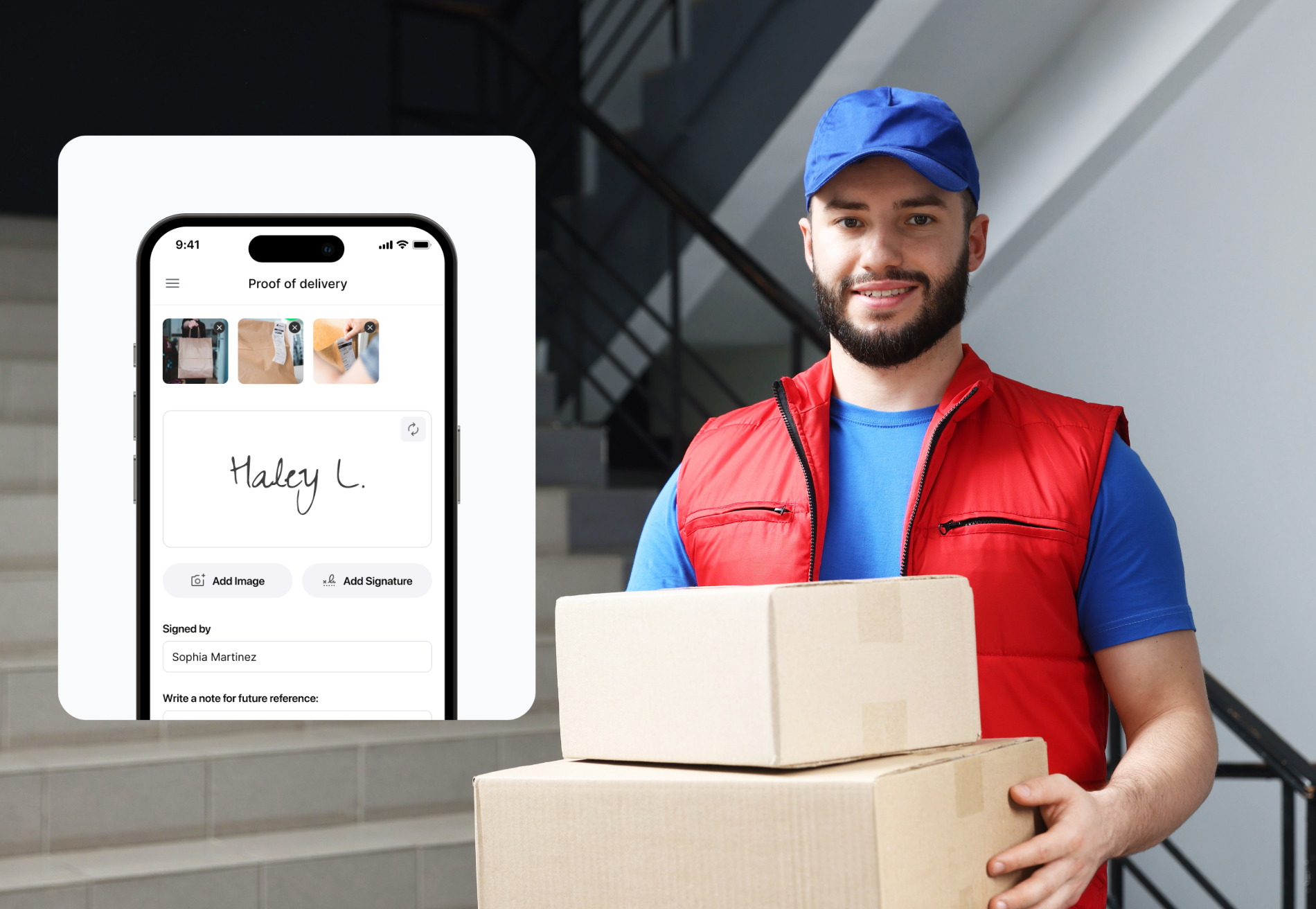
- Proof of delivery. Photo, signature, or barcode capture at the point of delivery, attached automatically to the order record and visible from the same dashboard that everything else lives in. Not a photo a driver texts to someone separately, which is a record that exists nowhere useful.
- Integrations. Orders should flow directly from the POS, ordering platform, or ecommerce system the business already runs to the delivery platform, with no manual entry in between. A platform with excellent dispatch tools that still requires someone to copy every order over by hand has quietly reintroduced the exact friction that centralization is supposed to remove.
- Analytics and reporting. This is the capability that's easiest to skip evaluating and the one that costs the most when it's missing. Driver performance, delivery times, on-time rates, and exceptions need to be visible without pulling data from multiple systems and reconciling it by hand, because a manager who can't see a trend forming, like one location's on-time rate slipping, finds out about the problem only after it's already become a pattern of customer complaints.
Shipday covers all six for small businesses (SMBs) and local delivery operations, which is what makes it an all-in-one delivery management platform rather than just another point tool. Auto-dispatch, AI-powered route optimization, tracking links that update as the driver moves, automated customer notifications, photo or signature capture at the point of delivery, and integrations with platforms including Toast, Shopify, GrubHub, and ChowNow. In-house and third-party drivers — DoorDash and Uber — run from the same dashboard. The free tier supports up to 10 drivers and 300 orders per month. Paid plans start at $39 per month.
For larger operations — enterprise fleets, multi-region logistics, complex carrier networks — platforms like Onfleet, DispatchTrack, or Bringg offer capabilities scaled to that complexity, at pricing that reflects it. The right platform is the one that covers the full job for the operation you are running. Centralization does not require the most powerful tool in the category. It requires one that has no gaps you have to work around.
What is centralized delivery management?
Centralized delivery management is the practice of running every part of a delivery operation — order intake, driver dispatch, route optimization, customer notifications, proof of delivery, and reporting — from a single platform. It replaces the patchwork of apps, spreadsheets, and manual communication that most delivery businesses start with, and gives dispatchers, drivers, and customers a single source of truth.
What tools do you need for centralized delivery management?
A complete centralized delivery management platform covers six areas: dispatch and driver management, route optimization, customer communications and tracking, proof of delivery, integrations with existing ordering and POS systems, and analytics. A platform missing any of these creates gaps that require additional tools, which reintroduces the fragmentation that centralization is designed to eliminate.
How is centralized delivery management different from using separate apps?
Separate apps create information silos. A dispatch tool, a tracking tool, and a customer notification tool may each do their individual job well, but they do not share data in real time. That means manual steps to move information between them, visibility gaps, and a higher chance of errors. A centralized platform eliminates the handoffs between tools because everything runs through a single system.
Do small businesses need centralized delivery management?
Yes — often more than larger operations. Small delivery businesses typically have fewer people managing more tasks per person. A dispatcher who is also answering customer calls and managing driver schedules has no room for the overhead from fragmented tools. Centralization reduces that overhead by automating the communication and assignment decisions that would otherwise require manual attention.
Can one platform really replace all the tools in a delivery operation?
For most SMB and local delivery operations, yes. The requirement is that the platform covers dispatch, routing, customer communications, proof of delivery, integrations, and reporting, with no meaningful gaps. When it does, there is no functional need for additional tools. For enterprise operations with complex logistics requirements, additional platforms may be needed — but that reflects operational complexity, not a limitation of centralization.
Choosing a platform that scales with you
Centralized delivery management works when one system handles communications, AI optimization, and the full feature set. Cut any of those and the patchwork comes back — different tools, different sources of truth, different places for information to fall through the gaps.
The test holds up over time, not just on day one. A platform that covers the whole job today should still cover it after a second location opens, after order volume doubles, after a busy season brings in third-party drivers to handle overflow. The operations that end up back in spreadsheets six months later usually pick a platform that fits the job as it was, not the job as it was about to become.
For SMB and local delivery operations, Shipday is built to cover that job now and as it grows. Try it free.



.avif)
Table of contents
Related articles
Ready to get started?
Play around with it first, add your team, pay later.


%201.svg)

.svg)