

How to price delivery: the formulas behind fees, zones, radius, and free delivery thresholds


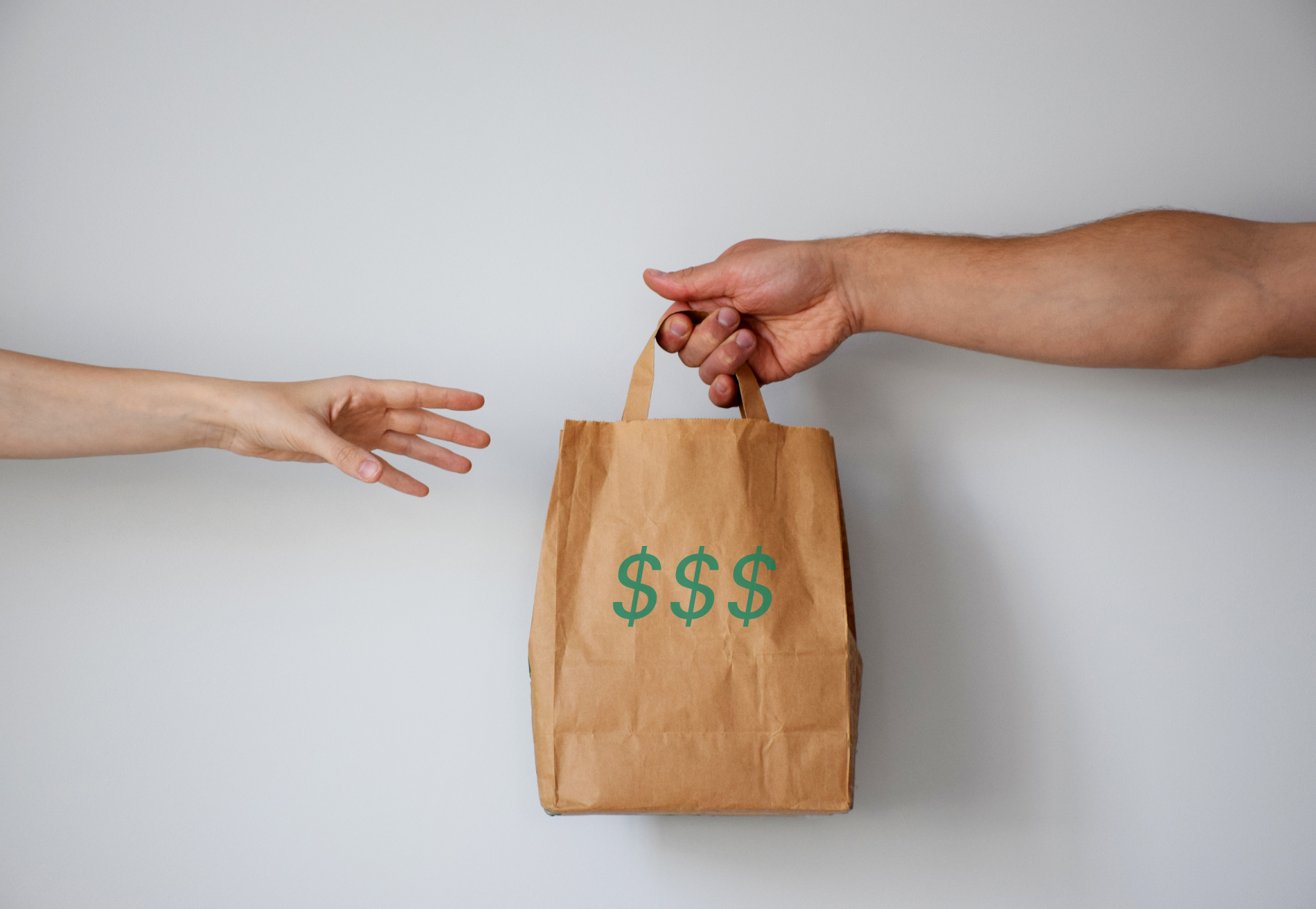
The order is $31. The delivery fee is four bucks. Your driver will spend 28 minutes and travel 7 and a half miles to get it to the door. By the time you pay the driver, cover the car, and replace the bag, you may have spent more on the trip than the customer spent on dinner.
That is how a busy delivery operation loses money without looking slow.
The right delivery fee starts with the cost, then adjusts for distance, order value, demand, and customers' willingness to pay. You need 3 numbers before you pick a model: cost per delivery, contribution margin on the order, and the maximum drive time your product can tolerate.
What does a delivery really cost?
Your true delivery cost includes driver pay, vehicle cost, insurance, software, packaging, and any third-party fleet fees. Leave one out, and the delivery fee looks healthier than it is.
For the costs connected to the vehicle itself, the IRS is helpful: 76 cents per mile for trips after July 1, 2026. That rate covers fixed and variable vehicle costs.
Quick estimate: Driver time per order + business miles × $0.76 + packaging + software allocation + insurance allocation
If a driver earns $18 an hour, spends 30 minutes on an order, drives 7 miles, and uses $0.60 in packaging, the trip costs $14.92 before software and insurance. A $4 fee doesn’t even cover a third of it.
Ever decision has to be based in cost first.
How do you calculate a break-even delivery fee?
Your break-even delivery fee is the delivery cost minus the product profit you are willing to use to support the trip. If you refuse to subsidize delivery from the order margin, the break-even fee equals the full cost per delivery.
Formula: Break-even fee = cost per delivery − product contribution assigned to delivery
Say an order produces $11 in contribution after food or product cost. You want to keep $7 for rent, management, and profit, leaving $4 to support delivery. If the trip costs $9, your break-even fee is $5.
Many operators choose a familiar fee—$2.99, $3.99, $4.99—before they run this math. The customer sees a neat number. The P&L sees the gap.
Which delivery-fee model should you use?
A flat fee is the cleanest starting point for a restaurant serving a 3–5-mile area.Percentages are great for bulky, high-value, or B2B orders where handling changes with the shipment.
Simple pricing may sell, but it can bite you in the long run.
What should different businesses charge for delivery?
Delivery fees should reflect product margin, handoff time, and distance—not a single market average. These operating benchmarks give local businesses a starting point; your own cost data determines the final number.
These are fee-setting benchmarks, not published industry averages. If your actual cost exceeds the range, raise the fee, tighten the radius, set a minimum order, or change the driver model.
How far should your delivery radius extend?
They say a country mile and a city mile are different. Set delivery radius by drive time distance. A 5-mile trip on an open road and a 5-mile trip through downtown are not the same.
Restaurants may start at 15–20 minutes, groceries and liquor at 20–30 minutes, florists and pharmacies at 25–40 minutes, and commercial routes at 30–60 minutes. Then plot the addresses you can reach inside that time during the hours you actually deliver—not a best case scenario when the roads are empty and you hit every green light.
The radius should also scale with order density. Ten orders in a single neighborhood can support a route that a one-off cannot. Route planning software lets you group those stops before miles become labor.
How do you calculate a minimum order?
Your minimum order is the basket value required to cover the portion of the delivery cost not covered by your fee. Tie it to contribution margin instead of choosing $20 or $30 because the number feels normal.
Formula: Minimum order = (cost per delivery − delivery fee + desired order contribution) ÷ contribution margin rate
If delivery costs $9, the fee is $4, you want $6 left from the order, and the contribution margin rate is 40%, the minimum order is 27.50-((9 − $4 + $6) ÷ 0.40.
Use the margin after product cost and order-level packaging. Revenue does not pay for the trip; contribution does.
When does free delivery make sense?
Free delivery makes sense when the extra contribution from a larger order covers the delivery cost and the profit you want to keep. The threshold has to be set above your normal order value, or it will incur a fee without changing customer behavior.
Formula: Free-delivery threshold = (delivery cost + desired contribution) ÷ contribution margin rate
At a $9 delivery cost, $6 desired contribution, and 40% margin, free delivery starts at $37.50. Round up to $39 or $40, then test whether average order value rises by more than the fee revenue you gave up.
A useful benchmark is 20–30% above current average order value. If your average order is $32, test $39 or $42—not $33.
Free delivery should buy a bigger basket. Otherwise you bought the delivery.
How does driver pay set the fee floor?
Your driver-pay model changes which cost moves with each order. Per-drop pay creates a visible unit cost, hourly pay makes stops per hour decisive, and hybrid pay makes both matter.
For per-drop drivers, add mileage or a long-distance supplement before setting the fee. For hourly drivers, divide loaded hourly cost by realistic stops per hour. At $22 loaded cost and 3 stops an hour, labor alone is $7.33 per delivery. Tips should reward the driver, not plug a hole in your pricing model.
Third-party fleets create a quoted cost per order. Compare the quote with the fee and order contribution before dispatch—not after the invoice hits your inbox.
When should you add surge fees?
A snowstorm is on the way, and folks are panic-ordering bread, milk, and toilet paper. You may be tempted to flip the surge pricing switch—but be sure to do so only when demand or conditions raise your actual cost or reduce capacity.
Show the fee before checkout and name the reason. “Friday peak delivery: $2” is easier to understand than a generic “service fee.” Customers will understand: pay more now, schedule later, pick up, or increase the basket. But random fees will make sure they don’t order again, or even abandon the cart in search of a deal
What should delivery software configure for you?
Delivery software should enforce service areas, route orders inside them, and apply operational rules consistently. Checkout fees, minimum orders, and free-delivery thresholds often still live in Shopify, WooCommerce, the POS, or a custom ordering site — configured once at setup rather than adjusted order by order.
Onfleet and Detrack publish the deepest native rate logic in this group. OptimoRoute and Routific focus on routing after the order enters the system. Shipday connects dispatch with major ordering platforms, but its public documentation does not confirm that zone fees push back to checkout.
Frequently asked questions
How much should a restaurant charge for delivery?
A restaurant should start at 2.99–5.99 within a 3–5-mile radius, then compare the fee to its actual per-delivery cost. If a trip costs $9 and the order can contribute $4 toward delivery, the break-even fee is $5. Raise the fee, require a larger order, or shorten the radius when the math does not work.
What is a good delivery radius for a local business?
A good radius covers addresses you can reach profitably inside the product’s drive-time limit. Restaurants often start at 3–5 miles or 15–20 minutes; grocery and retail may reach 5–10 miles or 20–30 minutes. Test the boundary during delivery hours. Traffic, stop density, parking, and handoff time matter more than a clean circle on a map.
How do you calculate a delivery fee?
Start with cost per delivery, then subtract the product contribution you are willing to use to support the trip. The result is the break-even delivery fee. If delivery costs $10 and you can assign $4 of order contribution to it, charge at least $6. Add a zone or distance surcharge when outer trips cost more than the base route.
Should you offer free delivery over a minimum order?
Offer free delivery only when the larger basket creates enough contribution to cover the trip and leave the profit you want. Divide delivery cost plus desired contribution by the contribution-margin rate. Then set the threshold at about 20–30% above the current average order value so it changes behavior rather than waiving a fee customers would have paid anyway.
What is a delivery zone and how do you set one up?
A delivery zone is a mapped area with its own availability, fee, or operating rule. Start with 3–5 zones based on drive time, road barriers, tolls, and order density. Use rings when costs rise with distance, and polygons when geography creates uneven trips. Set a base fee for the core, surcharges outside it, and a hard boundary where delivery stops.
Is it better to charge a flat delivery fee or a distance-based fee?
A flat fee works better inside a tight radius where trips cost about the same. Distance tiers work better when outer orders take longer and use more vehicle miles. Many local businesses need both: one flat fee for the core area and 1 or 2 distance or zone surcharges outside it. Keep the checkout explanation shorter than the pricing spreadsheet.





.avif)
Table of contents
Related articles
Ready to get started?
Play around with it first, add your team, pay later.


%201.svg)

.svg)