



Our research team analyzed more than 20 last mile delivery platforms and ranked the top 9 for mid-market e-commerce and logistics operations. We prioritized route optimization, scalability, ease of use, e-commerce integration, and total cost of ownership.
Our methodology weighted these criteria based on growing delivery business pain points from ease of use to the flexibility of available software integrations that save your team time on dispatch. See the full methodology at the end of this page.
Last Mile Delivery Software Compared
Last Mile Delivery Software Providers: Descriptions & Reviews
1. Shipday
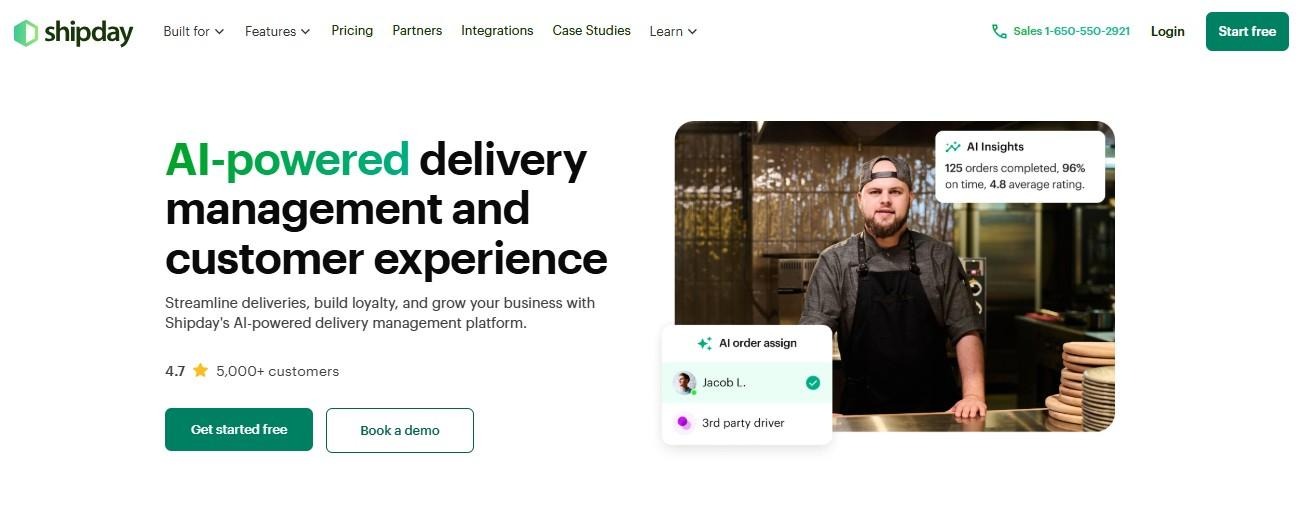
Shipday removes a big barrier for independent businesses getting into last-mile delivery: cost. The free tier covers 300 orders monthly and supports unlimited drivers. The platform integrates directly with Shopify and WooCommerce alongside other major e-commerce platforms. When order volume spikes, Shipday connects to DoorDash Drive and Uber Direct for on-demand overflow capacity for flat-rate, per-order fees. With a built-in driver app that supports 25+ languages and global functionality, Shipday is the best overall last-mile delivery software for most businesses.
- Route Optimization (7/10): Auto-dispatch with rule-based assignment. AI-supported tools save dispatchers time.
- Scalability (9/10): Free tier handles 300 orders. Paid plans scale to enterprise volume without per-driver fees. On-demand third-party drivers and multiple AI agent workflows speed growth.
- Ease of Use (9/10): Same-day setup. Multiple language support lets users access the app in their preferred language. Most users operate entirely from a smartphone.
- E-commerce Integration (9/10): Native Shopify, WooCommerce, Wix, Squarespace. Toast, Square, Otter POS integrations, among others.
- Total Cost (10/10): FREE tier covers most small operations. Paid plans start at $39/month.
Shipday Customer Reviews: Shipday earns an average 4.7 out of 5 on popular third-party review site Capterra, based on more than 25 reviews. One customer sums up his experience, saying, Shipday “makes shipping products and the outbound department a piece of cake, saving time and money while boosting efficiency."
2. Routific
Routific focuses exclusively on route optimization for scheduled deliveries. This software holds a high customer rating (4.9 out of 5 on Capterra) and is one of the only other systems we analyzed that offers a free subscription tier. Though that free tier covers 100 orders monthly, (compared to Shipday’s 300 monthly orders).
- Route Optimization (9/10): Core strength. Users report 25% delivery cost reduction through optimized routing.
- Scalability (8/10): Per-order pricing scales well. Pay $0.15 per order above 1,000 orders per month.
- Ease of Use (10/10): Customer reviews cite minimal training time.
- E-commerce Integration (7/10): API available. CSV upload. Less native integrations than competitors.
- Total Cost (8/10): Supports a free tier for up to 100 monthly orders. From there the price jumps up to $150 per month for 101 to 1,000 orders. SMS notifications cost extra ($16 to 19 per vehicle).
Routific Customer Reviews: Capterra reviewers give Routific a 4.9 out of 5, with one user saying, "I uploaded all stops and created optimized routes in minutes."
3. Track-POD
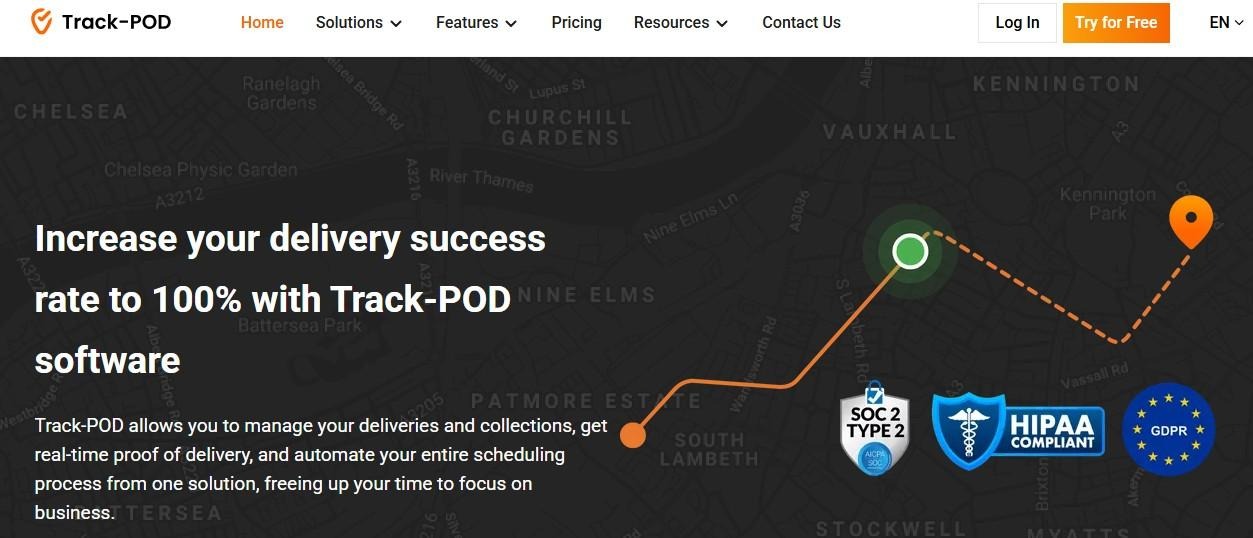
Track-POD specializes in proof-of-delivery documentation. The platform offers the most comprehensive POD features: barcode scanning, digital signatures, photo capture, plus two-year data storage for audits.
- Route Optimization (7/10): Solid optimization. Handles thousands of stops. Not as intuitive as some competitors, though.
- Scalability (7/10): Per-driver pricing can add up. Task limits on driver-limited plans.
- Ease of Use (7/10): Interface described as "functional but dated." Strong mobile app.
- E-commerce Integration (6/10): API available. Fewer native integrations than competitors.
- Total Cost (6/10): Starts at $49 per driver per month, paid annually; month-to-month users pay $59 per driver per month with a three driver minimum. Pricing is transparent, but adds up with larger fleets.
Track-POD Customer Reviews: Capterra reviews average 4.7 out of 5 with one user saying, "Completely eliminated filling PODs. Real-time tracking has been invaluable."
4. Wodely
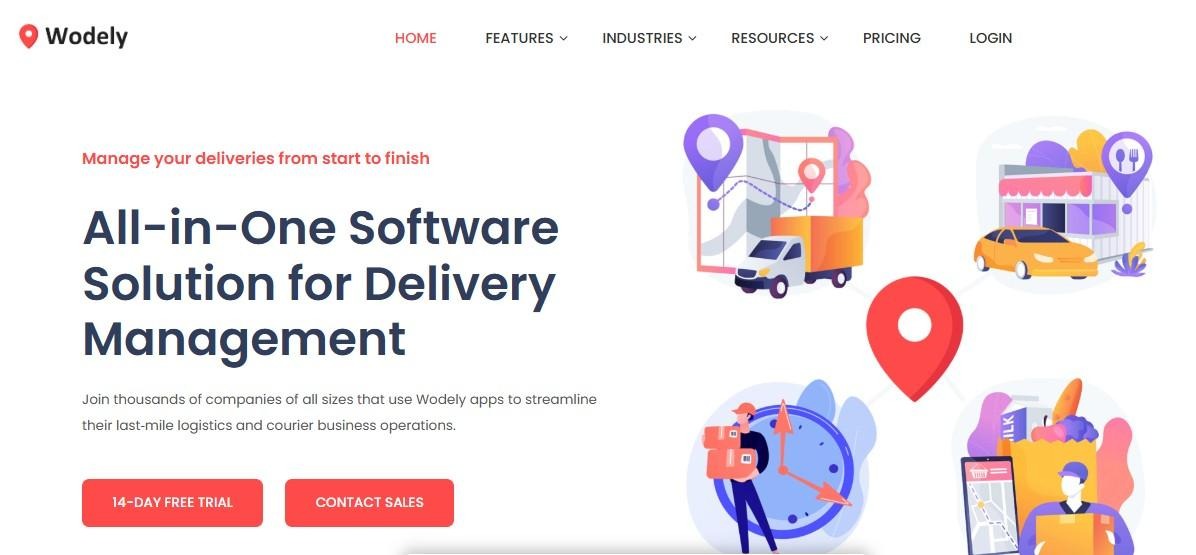
Wodely (formerly WooDelivery) offers the strongest white-label capabilities of the systems we analyzed. Though accessing the white-labeling feature requires a custom-quote. The platform supports branded driver apps, customer portals, and tracking pages.
- Route Optimization (7/10): Solid optimization included. AI-powered predictive ETAs on Professional plan.
- Scalability (8/10): Task-based pricing scales well. $0.04 to 0.08 per additional task beyond plan limits.
- Ease of Use (8/10): "Easy to use and simple to setup" per Capterra reviewers. Supports 18+ languages (compared to Shipday’s 25+).
- E-commerce Integration (9/10): Native Shopify, WooCommerce plugins. Zapier integration. Strong API.
- Total Cost (7/10): Starter $49 per month (up to 400 tasks, up to 20 drivers). Professional $159/month (2,000 tasks, up to 500 users).
Wodely Customer Reviews: This software averages a 5.0 out of 5 on publicly posted reviews. That high score is based on only a handful of reviews (5 at the time of this writing). Reviewers note Wodely is “simple to setup” and “always adding new features.”
5. OptimoRoute
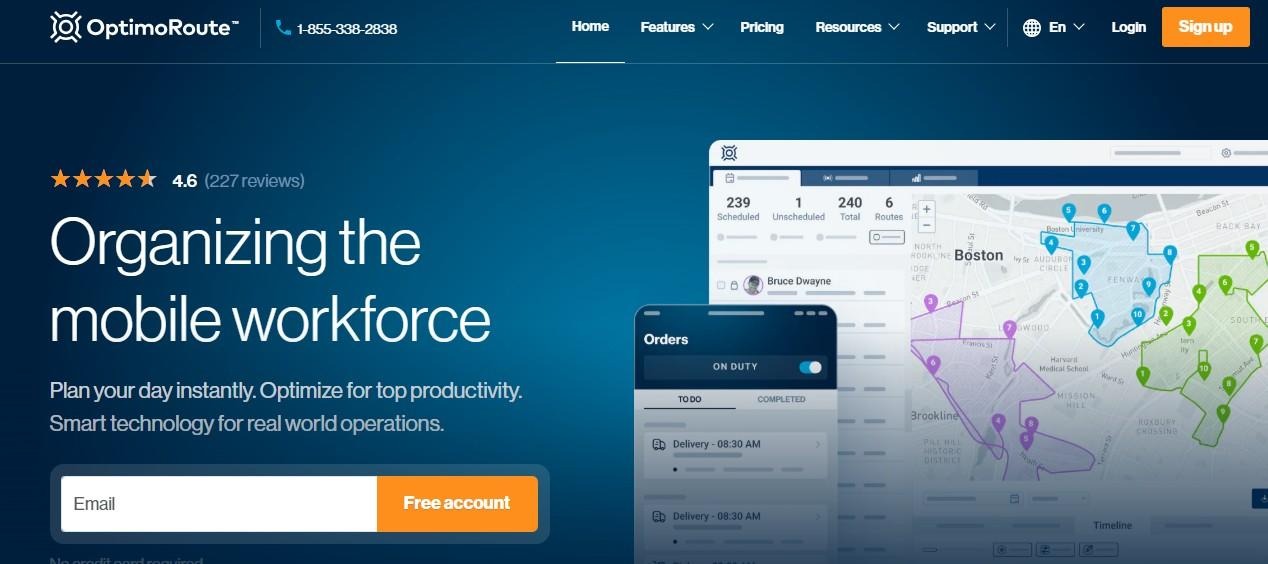
OptimoRoute delivers the most sophisticated multi-day route scheduling. The platform handles complex constraints: driver skills, vehicle capacity, week-long delivery windows. It has strong adoption in grocery and meal kit delivery.
- Route Optimization (9/10): Core strength is multi-day scheduling. Handles 10,000+ optimizations in seconds.
- Scalability (7/10): Limited by per-driver pricing. Order limits (700 to 1,000) per subscription tier.
- Ease of Use (8/10): Clean interface. Learning curve for advanced features.
- E-commerce Integration (8/10): Shopify, BigCommerce, Magento via API. Strong e-commerce focus.
- Total Cost (7/10): $35.10 to $49 per driver per month. 30-day free trial. Month-to-month contracts are available, with annual contracts receiving a 10% discount.
OptimoRoute Customer Reviews: Optimoroute online reviews average 4.6 out of 5. Reviews say Optimoroute’s support has “been amazing assisting me with functionality and planning for growth."
6. Tookan
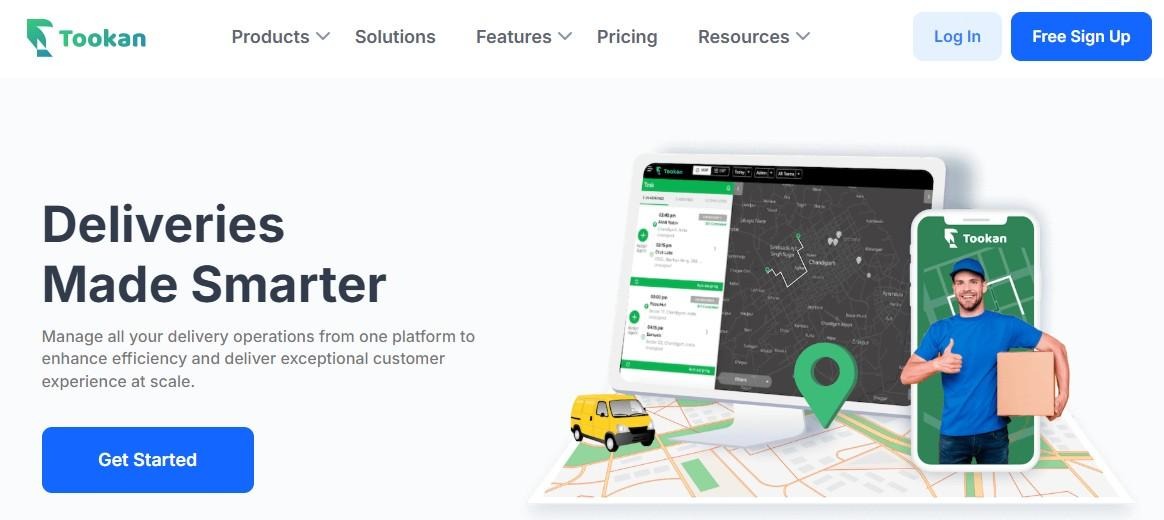
Tookan targets on-demand delivery businesses like restaurants, groceries, home services. The platform offers automated dispatch and real-time GPS tracking. Pricing structure uses add-ons for advanced features.
- Route Optimization (6/10): Route optimization costs extra ($0.12 per task). Basic routing included.
- Scalability (7/10): Task-based pricing. 200 tasks at $39 per month. Extra tasks cost $0.22 each.
- Ease of Use (6/10): Users report steep learning curve. Interface can be confusing initially.
- E-commerce Integration (7/10): Integrations available. Add-on costs for many features.
- Total Cost (5/10): Starting at $99 per month and going up to $499 per month; one of the highest base-line prices on this list.
Tookan Customer Reviews: Tookan averages 4.1 out of 5 based on publicly available user reviews. Users call the platform “reliable” and “cost-effective.”
7. Route4Me
Route4Me offers a modular pricing structure that requires a custom quote. Businesses select only the features they need from an extensive add-on marketplace. For some businesses, that flexibility can come with added complexity and potentially high costs.
- Route Optimization (7/10): Capable, but users report occasional overlapping routes.
- Scalability (6/10): Add-ons can make scaling expensive.
- Ease of Use (6/10): Modular system creates complexity. Requires careful configuration.
- E-commerce Integration (7/10): API available. Integrations through add-on marketplace.
- Total Cost (5/10): Route4Me does not list pricing publicly; users must contact their sales team for a custom quote. This lack of transparency makes it hard to tell if you are getting a good deal.
Route4Me Customer Reviews: Route4Me averages a 4.4 out of 5. Reviewers note the availability of tutorials and say, “for the money we spend on it it's definitely worth it.”
8. Onfleet
Onfleet delivers enterprise-grade automation for high-volume operations. The platform powers delivery for brands like Kroger and Imperfect Foods. The starting price of $599 per month might be steep for most mid-market operations.
- Route Optimization (8/10): Strong optimization with auto-dispatch and predictive ETAs.
- Scalability (9/10): Built for enterprise scale. Unlimited dispatchers and drivers.
- Ease of Use (8/10): Clean interface. Users report it taking "30 to 45 minutes to get fully automated
- E-commerce Integration (8/10): Robust API. Pre-built integrations with major platforms.
- Total Cost (3/10): $599 per month to start. Additional SMS fees. Annual contracts. A 14-day free trial is available.
Onfleet Customer Reviews: This software averages a 4.6 out of 5. Reviewers praise the historical reporting and time-tracking features and say the software “saved us a huge amount of time.”
9. eLogii
eLogii serves enterprise logistics operations requiring maximum customization. The platform offers the most granular control over routing parameters, vehicle configurations, delivery constraints. It also offers NHS healthcare validation in the UK.
- Route Optimization (9/10): Highly customizable. Handles complex multi-depot operations.
- Scalability (8/10): Built for enterprise. 2,500 tasks at entry tier.
- Ease of Use (6/10): Feature-rich platform can mean steeper learning curve. Users say the driver app needs improvement.
- E-commerce Integration (7/10): Strong API. Custom integration support available.
- Total Cost (4/10): Quote-based enterprise pricing.
eLogii Customer Reviews: Users rate eLogii an average of 4.7. Reviews praise the “good support” and “insightful analytics”
Methodology: How We Evaluated
We scored each provider on five criteria weighted by importance to growing e-commerce and logistics operations managing their own delivery fleets.
- Route Optimization (25%): We looked for route quality, multi-stop efficiency, traffic awareness, giving the highest scores to AI-supported workflows that save time.
- Scalability (25%): Ability to grow from dozens to thousands of daily deliveries without pricing cliffs or software delays.
- Ease of Use (20%): We considered user reported time to deployment, training requirements, driver app quality and multiple language support.
- E-commerce Integration (15%): Native platform connections, API quality, order import automation.
- Total Cost of Ownership (15%): We rewarded transparent pricing with flexible membership models. Hidden fees, per-driver and per-order models scored lower, with custom-quoted systems earning the lowest scores.
Bottom Line
Shipday earned our top ranking because it eliminates financial risk for businesses building delivery operations. The free tier covers 300 orders monthly with unlimited drivers. Most growing e-commerce operations can launch delivery without paying anything. The platform deploys in hours, integrates with major e-commerce platforms, and hails third-party drivers when demand spikes. No enterprise contracts. No per-driver fees. No IT department required.
[Start with Shipday Free Today]
Evaluation completed February 2026. Pricing and features subject to change.




.avif)
Table of contents
Related articles


Ready to get started?
Play around with it first, add your team, pay later.


%201.svg)

.svg)