For local and independent pharmacies, the shift toward home delivery has moved from a value-add service to a business necessity. Patients now expect the same convenience they get from major retailers, and they are increasingly voting with their feet. According to the 2025 J.D. Power U.S. Pharmacy Study, customer satisfaction with mail-order and digital pharmacies is rising steadily, now scoring 54 points higher than traditional chain drug stores.
For those with chronic conditions or limited mobility, prescription delivery is often more than a convenience—it’s a lifeline. But for a pharmacy owner, moving medication from your shelf to a patient’s front door is complex. It involves strict compliance, absolute accuracy, and logistics that can quickly become a headache if managed manually. If you're tired of handling delivery routes on paper or fielding calls from patients wondering where their meds are, it's time to build a better system.
The High Cost of Non-Adherence
The primary goal of any pharmacy delivery service is to help patients stay adherent to their medications. This isn't just a clinical goal; it's an economic one. Studies from the National Academy of Medicine show that medication non-adherence costs the U.S. healthcare system between $100 billion and $290 billion annually due to avoidable hospitalizations.
When you make it easy for people to get their prescriptions, you improve health outcomes and build long-term loyalty. Research from UnitedHealth Group found that patients using 90-day home delivery prescriptions have up to 38% fewer non-adherent individuals compared to those using traditional retail pickups. For your pharmacy, every 1% improvement in adherence isn't just a medical win—it's a tool that stabilizes your recurring revenue.
Choosing the Right Delivery Model
One of your first decisions is determining who will physically move the prescriptions. Most pharmacies choose between two models, though many find success with a hybrid approach.
Direct Delivery with Your Own Team
Managing your own drivers gives you the most control over the patient experience. Your drivers are the face of your pharmacy. You have direct oversight of how medications are handled and when they arrive.
Using an in-house team is great for brand consistency. When a patient sees a familiar face from their local pharmacy, it reinforces that personal connection. However, this model requires organization. You have to handle hiring, scheduling, vehicle maintenance, and insurance. The NACDS Cost of Dispensing Study notes that the national average for manual retail dispensing is over $12. Improving your delivery efficiency is key to protecting these margins.
Third-Party Couriers
Using external delivery services lets you scale quickly without the overhead of a fleet. This is often helpful for peak periods or for pharmacies just testing the waters of delivery.
While this is often easier to start, you have less control over the "final mile." You're trusting an outside company to represent your pharmacy. Furthermore, failed deliveries are expensive. Research from Loqate indicates that failed delivery attempts cost businesses significantly in lost time, fuel, and reorganization—with roughly 84% of shoppers unlikely to return after a single poor delivery experience.
The Hybrid Approach
Many successful pharmacies combine both. They use in-house drivers for core local routes and tap into third-party couriers to handle long-distance deliveries or overflow. Technology like Shipday helps coordinate these different moving parts in one place so nothing falls through the cracks.
How Technology Simplifies Pharmacy Operations
Trying to manage routes and driver assignments on paper is a recipe for errors. Delivery management software solves these everyday challenges by automating the work that used to take hours.
1. Improved Routing and Auto-Assignment
Instead of drivers manually deciding which house to visit first, software can automatically calculate the most efficient path. It factors in traffic, road closures, and delivery windows.
Auto-assigning drivers also removes the need for manual dispatching. This frees up your team to focus on patient care instead of looking at maps. Because the system handles the math, you don't have to worry about human error in the planning stage. Optimized routing doesn't just save time; it slashes fuel costs and vehicle wear-and-tear.
2. Real-Time Tracking for Peace of Mind
Transparency is a major driver of patient satisfaction. According to J.D. Power, 63% of mail-order customers are interested in digital-first pharmacy experiences precisely because of the visibility they provide.
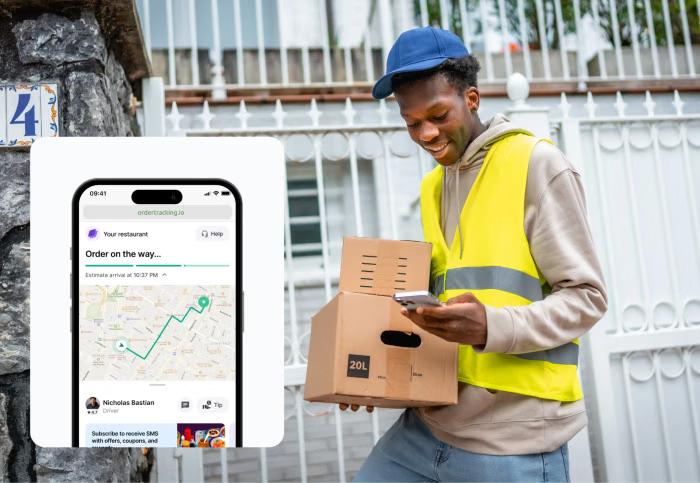
Real-time tracking allows both the pharmacy and the patient to see exactly where a delivery is. This reduces "where is my prescription?" calls to your front desk. When patients can see their driver on a map, they feel more in control.
3. Digital Proof of Delivery
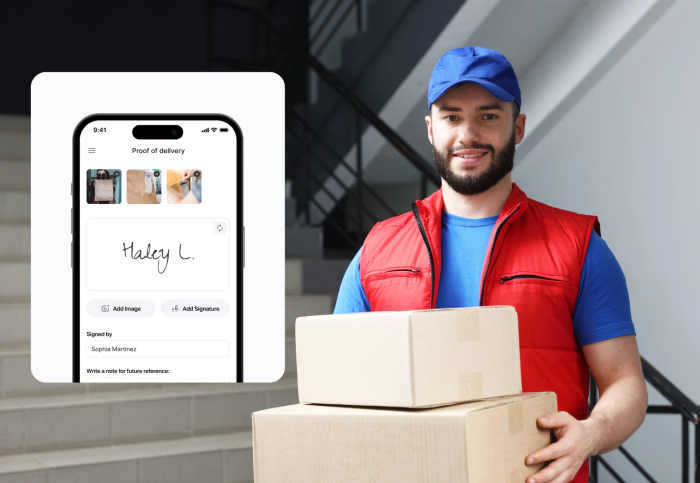
In a pharmacy setting, knowing a package was "left on the porch" isn’t enough—especially for controlled substances. You need concrete proof for your records and for compliance. Modern systems allow drivers to capture signatures or photos as proof of delivery (POD).
These digital records create an instant audit trail. If there’s ever a question about whether a medication reached the right person, you have the data to prove it. This level of accountability is essential for handling sensitive prescriptions and passing regulatory audits.
A Day in the Life: Pharmacy Delivery Scenarios
To understand how this works in practice, let’s look at a few common scenarios a pharmacy team faces every day.
The Morning Rush
At 9:00 a.m., your pharmacy technician has a stack of 45 prescriptions ready for delivery. In a manual system, they might spend 30 minutes trying to group addresses by ZIP code and calling drivers.
With delivery software, the tech simply uploads the orders. The system looks at the 45 stops, calculates the best path for your two drivers, and sends the routes directly to their phones. By 9:15 a.m., the drivers are loading their vehicles and the tech is back to filling prescriptions.
The Temperature-Sensitive Delivery
A patient needs a 30-day supply of insulin, which must remain between 2°C and 8°C. The driver knows this because the order is flagged with a "refrigerate" note in their app. They place it in a specialized cooler and mark the delivery as high priority.
As the driver approaches the house, the patient receives an automated text: "Your medication is 5 minutes away." The driver arrives, the patient is at the door, and the signature is captured. The pharmacy has a digital record that the cold-chain was maintained and the handoff happened exactly when it was supposed to.
The Urban Chain: Balancing Inventory
A growing urban pharmacy chain noticed that deliveries and stock levels weren't always aligned. Prescriptions would go out, but staff would find shelves short on high-demand items.
By using the route and order data collected by their delivery platform, they began to understand repeat order patterns in specific neighborhoods. They used this data to better balance their inventory across locations, leading to fewer waste write-offs and more satisfied customers.
Building and Managing a Driver Team
Your drivers are often the only people your patients interact with in person. Managing them effectively is just as important as managing your pharmacists.
Hiring for Trust and Empathy
When you hire a delivery driver, you aren't just looking for someone with a clean driving record. You’re looking for a representative of your brand. Customer satisfaction surveys consistently show that the "politeness and respect" of the delivery person is one of the top three factors in how a patient rates a pharmacy service.
Look for people who are:
- Punctual: Reliability is the foundation of a delivery service.
- Empathetic: Many patients receiving deliveries are ill or stressed. A kind word at the door goes a long way.
- Detail-oriented: They need to be comfortable using an app and following strict handoff procedures for controlled substances.
Training for Compliance and Safety
Before a driver makes their first stop, they need to understand the stakes. This includes:
- HIPAA training: Ensuring they know how to protect patient privacy and never leave sensitive info exposed.
- Safe driving: Emphasizing that safety is more important than speed.
- Handling procedures: Clear rules on what to do if a patient isn't home or if a signature is required but unavailable.
Monitoring Performance Without Micromanaging
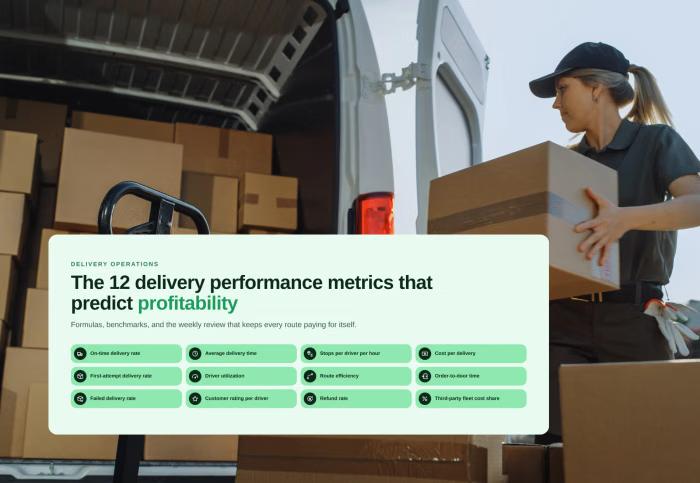
Technology lets you see how your team is doing without you having to constantly check in. You can track metrics like:
- On-time delivery rate: Are your routes realistic?
- Average delivery time: Is one route consistently taking longer than others?
- Failed delivery rate: Are drivers struggling with specific areas?
Using this data allows you to have constructive conversations. If a driver is consistently behind, you can look at their route together and see if traffic or a specific stop is causing the delay. It turns management into a collaborative effort to make the job easier for everyone.
Software Integration: Connecting the Dots
A delivery operation is only as good as the data feeding it. To achieve true efficiency, your delivery management software should work in harmony with your Pharmacy Management System (PMS).
When a pharmacist finishes a fill in the PMS, that order information—patient name, address, and special instructions—should flow directly into your delivery dashboard. This eliminates double-entry, which is a common source of typos and missed deliveries. For pharmacies using Shipday, this integration ensures that the "ready to ship" status in the pharmacy is mirrored in the driver's queue instantly.
Marketing Your Delivery Service
Once you have a reliable system in place, you need to tell your patients about it. Many independent pharmacies offer delivery but don't promote it effectively.
- Mention it at checkout: Ensure every tech asks, "Would you like your next refill delivered for free?"
- Use your digital channels: 67% of customers are aware of digital pharmacy brands like Amazon Pharmacy. You need to remind them that their local pharmacy offers the same convenience with better personal care.
- Target chronic care patients: Focus your marketing on those with recurring 90-day prescriptions. These are the patients who benefit most from delivery and provide the most stable revenue for your business.
- Leverage physical signage: Don't forget bag stuffers and window clings. A simple QR code that allows a patient to sign up for delivery while they wait for a fill can bridge the gap between in-person and digital service.
Conclusion: Delivering Trust Through Smart Systems
Reliable delivery builds patient confidence and fuels business growth. By viewing delivery software as a tool for compliance and growth—rather than just a cost—pharmacies can modernize their operations and serve their communities more effectively.
Whether you’re starting a new program or improving an existing one, the right technology ensures your pharmacy stays efficient, compliant, and focused on the patients who depend on you. In a world where billions are lost to non-adherence, your delivery service isn't just a logistics operation—it’s a vital part of the care you provide.

Moin IslamCo-founder, CEO
Automating local deliveries globally. Writes about restaurant delivery management, growing delivery business, and managing profitable restaurants.