Running a meal prep business looks easy from the outside—fresh meals, sleek packaging, loyal subscribers, and a schedule that practically runs itself.
But anyone who’s worked behind the counter knows better. It’s not the recipes or the marketing that keep you up at night—it’s the delivery.
You’re juggling prep schedules, storage space, driver coordination, and customer communication, all while trying to make sure every meal lands fresh and on time. A small delay can ripple across routes, spoil product, and frustrate customers who plan their week around your drop-offs.
Delivery isn’t an add-on—it’s the heartbeat of your business. When it’s smooth, everything feels calm. When it’s messy, even great food can’t save you.
That’s why more operators are turning to meal prep delivery management software like Shipday to bring order to the chaos. The right system turns unpredictable days into repeatable success stories.
1. Where convenience meets complexity
Meal prep delivery has exploded in popularity over the last few years. According to Grand View Research, the global meal kit delivery market surpassed $20 billion in 2022 and is expected to grow more than 15% annually through 2030. Customers aren’t just buying food—they’re buying time.
And they expect that convenience to be flawless. Meals should show up when promised, labeled accurately, and kept at the right temperature. A single late delivery can shake their trust.
Behind that promise is a complex rhythm: prepping, portioning, packing, and routing—all on repeat. Most operators follow a weekly cadence. Food is cooked and chilled on Sunday, labeled and stored overnight, then loaded and dispatched Monday morning. Another batch rolls midweek.
Each handoff is a pressure point. If prep runs long, drivers wait. If routing takes too long, meals start to warm. When your system depends on a dozen people working perfectly in sync, the odds of something slipping rise fast.
That’s why reliable delivery management software becomes essential. Platforms like Shipday keep every step connected—from kitchen to cooler to doorstep—so drivers get routes instantly, customers get updates automatically, and you can focus on running the business, not chasing updates.
2. Why meal prep delivery gets messy fast
Even with a good system, complexity can spiral into chaos. What starts as a few neighborhood stops can quickly evolve into multiple routes, narrow delivery windows, and dozens of last-minute adjustments.
Here’s why things get complicated so quickly:
- Tight delivery windows. Customers often plan meals around specific drop-off times.
- Fluctuating order volume. Weekly subscriptions rise and fall, forcing you to constantly adjust staffing and routing.
- Temperature control. Hot entrees, chilled salads, and frozen smoothies require different timing and handling.
- Expanding territory. Adding new neighborhoods introduces traffic, mileage, and cost challenges.
- Manual coordination. Group chats and spreadsheets may work early on but become unsustainable fast.
Most meal prep businesses begin with manual methods or gig platforms. While workable at first, those tools introduce their own friction—extra fees, limited visibility, and a loss of customer control. As order volume increases, so does the risk of late deliveries, food waste, and burnout.
A robust meal prep delivery management system replaces those patchwork tools. It automates dispatching, balances driver assignments, and gives you real-time visibility into each route, helping small teams deliver like pros.
3. The hidden cost of inefficiency
On paper, a few missed deliveries might not seem like a big deal. In reality, they’re expensive.
Say you deliver 400 meals a week. If 5% arrive late, that’s 20 unhappy customers—20 chances for refunds, replacements, or cancellations. If each refund costs you $20 in product and labor, that’s over $20,000 a year lost to inefficiency.
The biggest drains often come from:
- Wasted miles. When routes aren’t optimized, drivers zigzag between neighborhoods, wasting fuel, time, and energy. Those extra miles quickly add up across multiple routes, cutting into profit margins.
- Idle time. The kitchen’s ready, but drivers are waiting on assignments or labels. Every delay wastes payroll and slows the entire operation.
- Spoilage and rework. Missed delivery windows mean food loses freshness or must be re-cooked and replaced—doubling costs and effort.
- Refunds and churn. Each late delivery chips away at customer trust. Over time, that frustration turns into refunds, cancellations, and lost loyalty.
There’s also the hidden toll: stress. When operations are messy, no one enjoys the work. Managers spend their day troubleshooting instead of improving systems.
Efficiency isn’t about doing more—it’s about doing the same work with less chaos. Shipday automates dispatch, assigns routes instantly, and provides real-time delivery tracking. That structure saves time, gas, and frustration.
4. Turning chaos into clarity with delivery management software
At some point, every growing meal prep operator hits the same wall. The orders increase, but the system doesn’t. You’re spending hours each week matching names to addresses, checking routes, and texting drivers to make sure they’re on track.
That’s where delivery management software steps in.
Platforms like Shipday take over the repetitive, high-stress parts of delivery—routing, dispatching, tracking, and customer communication—so you can focus on the food.
Here’s what that looks like in practice:
When a new batch of orders comes in, the system immediately sorts them by zone and time window. Instead of managers manually assigning stops, the software auto-assigns each delivery to the nearest available driver based on location, capacity, and workload. That saves several minutes per order and prevents overlaps that waste fuel.
Once assignments are made, routes optimize automatically using real-time traffic data and historical delivery patterns. If there’s an accident or detour, the system reroutes instantly so meals still arrive within their freshness window. Drivers see the change live in their app—no need for a call or text.
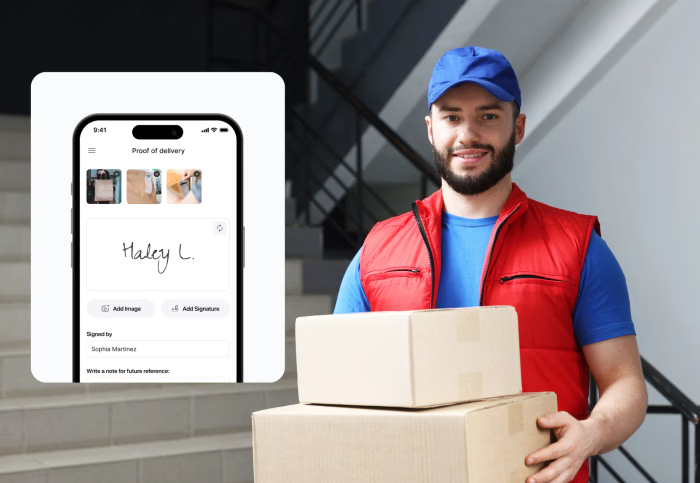
As they complete deliveries, drivers mark each stop, track progress, and capture proof of completion with a quick photo or signature. That record flows straight to the manager dashboard for verification, creating accountability without micromanagement.
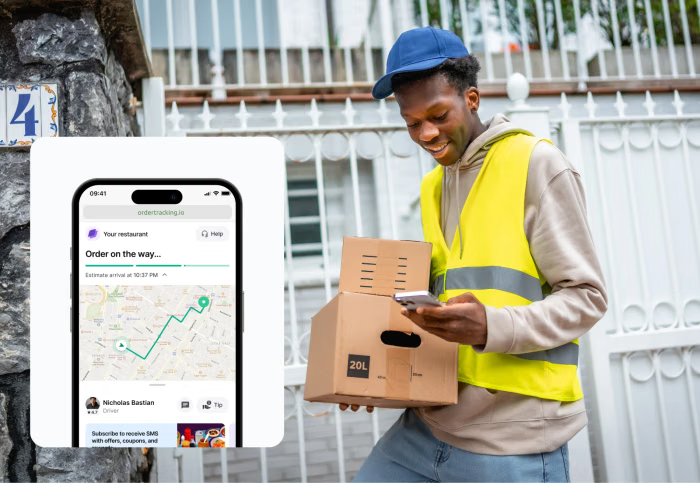
Meanwhile, customers receive automated updates at every milestone—a text when their order is on the way, an ETA update if traffic shifts, and a delivery confirmation once the meal arrives. Fewer phone calls, fewer questions, and a lot more trust.
Managers oversee it all from a single live dashboard. They can see every active driver, check delivery progress in real time, and jump in quickly if a route falls behind. The entire operation moves from guesswork to clarity—every order visible, every customer informed, every shift calmer than the one before.
5. Picture two versions of your business
In the first version, delivery day feels like a guessing game from start to finish. Orders pile up by the door, drivers wait for assignments, and customers are calling before their meals even leave the kitchen. The team scrambles to keep up, checking routes manually and sending updates through scattered messages. You finish the day tired, frustrated, and uncertain whether everything actually got delivered on time. The stress lingers into the next morning, knowing you’ll have to do it all again soon.
In the second version, everything runs with quiet efficiency. Routes are pre-planned, and each driver opens their app to see an organized list of stops, complete with real-time traffic updates and optimized paths. Customers get automatic notifications when their meals are on the way, along with accurate ETAs. In the kitchen, the handoff is seamless—drivers arrive right as orders are packed and ready. You glance at your Shipday dashboard and see smooth progress across every route, each delivery confirmed in real time. The day ends not with exhaustion but with calm confidence that your system worked exactly as it should.
Same team. Same food. Just a smarter, more connected operation.
That’s the shift delivery management software makes possible—from constant reaction to confident control, turning chaos into clarity with every delivery day.
6. Choosing software that fits your operation
Not every delivery management system works for meal prep. Some are built for restaurants; others for couriers. You need a platform that understands recurring orders, temperature-sensitive products, and tight windows.
When evaluating software, look for:
- Routing automation that adapts to your schedule and geography.
- Driver apps that are easy to use for proof of delivery.
- Real-time dashboards that give you instant visibility.
- Analytics to review performance and timing.
- Integration with your ordering system or CRM.
- Scalability for new routes, kitchens, or driver teams.
Shipday checks each of these boxes. It’s built for operators who need clear information and reliable automation without extra complexity.
When comparing vendors, ask how long onboarding takes, what support looks like, and how often data updates. The right software won’t just fit your workflow—it will improve it from day one.
7. Using automation to protect the personal touch
Automation can make your operation run faster, but it also makes it more personal—because it gives your people time to focus on what matters.
Meal prep isn’t just about food; it’s about helping customers simplify their lives. They rely on you to show up when you say you will. That reliability builds trust.
When Shipday automates routing and updates, your staff has time to connect. Drivers can double-check orders or greet customers at the door. Managers can send follow-ups, collect reviews, or experiment with new menu ideas.
Technology should create space for human connection, not replace it. Consistency builds confidence. Personality keeps customers coming back.
8. Building growth on reliable delivery
The best meal prep businesses grow by mastering repetition—prep, pack, deliver, repeat. When that cycle runs smoothly, scaling stops feeling risky.
Reliable delivery is the backbone of that growth. With a strong delivery management system, you can expand routes, hire more drivers, or even open new kitchens without losing control.
Shipday helps make that possible. Its automation, real-time tracking, and analytics let operators scale confidently while maintaining quality and service.
According to an Instacart consumer survey, nearly 90% of shoppers expect accurate delivery updates when ordering groceries or meals online. That expectation has now become the standard for every food business, including meal prep. Delivering on it—literally—is what separates trusted brands from forgettable ones.
Looking ahead, technology will raise the bar even higher. AI-driven dispatch, predictive ETAs, and sustainability tracking are already changing how delivery runs. Businesses that build solid systems now will adopt those advancements seamlessly later.
Because in the end, your food is only as good as the moment it arrives. With Shipday behind it, that moment is always right on time.
Ready to optimize your meal prep delivery routes?
👉 See how Shipday helps meal planning businesses deliver faster, smarter, and stress-free.

Moin IslamCo-founder, CEO
Automating local deliveries globally. Writes about restaurant delivery management, growing delivery business, and managing profitable restaurants.