Online grocery delivery is no longer a pandemic-era trend—it’s the new standard.
Customers expect to fill a cart, click a button, and have fresh produce and cold milk on their doorstep by dinner.
For independent grocers, that’s a tall order. Between in-store traffic, coordinating drivers, and keeping perishables fresh, delivery can feel like juggling glass jars while running the register.
The good news: with the right system, it becomes less chaos and more control. Tools like Shipday bring order, visibility, and calm to every stage of delivery—helping grocers master direct delivery management and scale their operations efficiently.
1. Grocery delivery is booming—and so are the growing pains
The grocery delivery market keeps expanding. In the U.S., online grocery sales are projected to make up 17% of all grocery shopping by 2029 (Brick Meets Click). Nearly half of U.S. consumers now order groceries online at least once a month (Chain Store Age).
That growth is fueled by changing routines: more dual-income households, less time to shop, and more comfort with delivery apps. The big chains invested early in logistics, but smaller operators are catching up fast by adopting affordable, plug-and-play technology.
For grocers, that shift is both an opportunity and a challenge. Delivering perishable products within tight time windows requires precision. One wrong turn or delayed pickup can melt profits—and ice cream.
Meanwhile, customers expect big-chain speed and accuracy, even if you’ve only got two drivers and a packed store.
That’s why efficiency matters. Delivery isn’t a side hustle anymore—it’s part of your core business. If the system breaks, it doesn’t just delay groceries—it slows down the whole store.
Margins in grocery retail are notoriously thin—often between 1% and 3%. That means a few late deliveries, refunds, or idle drivers can erase a full day’s profit. Reliable systems don’t just make life easier for staff—they keep the business viable.
2. Why grocery delivery gets complicated fast
It’s noon on a Sunday.
Customers are lined up at the deli, carts jam the aisles, and a dozen online orders are due within the hour. Two drivers are already out, another just called in sick, and the phones are ringing with “Where’s my order?”
The overlap between in-store and online demand stretches teams thin. One associate might be bagging an order while restocking or covering a register. Add unpredictable weather or supplier delays, and a small scheduling slip can ripple through the entire day.
The line between “organized” and “overwhelmed” is thin. When the system breaks, it’s not just deliveries that fall apart—it’s everything around them. Missed orders slow checkout lanes. Stressed staff make mistakes. A few bad reviews online can undo weeks of good work.
Here’s why it gets messy fast:
- Tight delivery windows: One-hour slots leave zero margin for traffic or bad weather.
- Perishable goods: Frozen, chilled, and dry goods in one order—temperature control is non-negotiable.
- Split workflows: Store teams are picking online orders while serving walk-ins.
- Communication gaps: Texts, calls, and Post-its don’t scale when things get busy.
Shipday eliminates the guesswork. One shared dashboard brings together orders, drivers, and updates so everyone—staff and customers alike—sees the same thing in real time.
When operations are unified, managers stop juggling spreadsheets and start managing the experience. That shift—from reaction to coordination—is what makes local grocery delivery scalable.
3. Choosing the right delivery model for your store
Every grocer has to decide how to get products out the door. There’s no universal playbook—it depends on your margins, volume, and staff.
Third-party delivery:
Fast to launch, minimal setup, but costly. Services like Uber Direct or DoorDash Drive provide drivers, yet commissions can eat into profit. You trade speed for control.
Direct (in-house) delivery:
You control the quality, customer data, and costs—but it requires coordination. Shipday automates assignments, routes, and notifications so your team can run like a machine.
Owning your own delivery also means owning your customer data—purchase history, frequency, and preferences. That insight lets you predict demand, manage promotions, and plan inventory smarter. When third-party platforms hold that data, it’s harder to build loyalty or measure what’s driving repeat orders.
Hybrid delivery:
Most grocers land here—outsourcing overflow zones or peak days while managing core routes themselves. Shipday’s dashboard ties it all together so third-party and in-house deliveries run in sync.
Choosing the right model isn’t about what’s trendy—it’s about what fits your operation today.
If you’re doing fewer than 30 deliveries a day, using a third-party fleet might make more sense until demand grows. Once deliveries become part of your daily rhythm, bringing drivers in-house gives you more control and better margins.
Distance matters too. The larger your radius, the more chances there are for melted ice cream or wilted greens. That’s where route visibility and live tracking pay off.
Many stores start hybrid and stay that way—scaling up during holidays or high-volume weekends, then dialing back. The key is flexibility, not perfection.
For example, a small neighborhood market might use third-party drivers for evening orders while managing morning and midday deliveries directly. A larger regional chain, on the other hand, could maintain its own fleet for core routes but partner with gig services during storms or holidays. What matters most is visibility—knowing who’s handling each order, how long it will take, and how to keep customers informed every step of the way. Technology bridges those gaps so mixed models still feel seamless to the shopper.
4. Automate the chaos: how technology brings order to delivery
Manual dispatching and route planning work—until they don’t. Once you hit 15 orders in an hour, the system collapses.
Shipday automates what slows you down:
- Smart order assignment: Orders go to the nearest available driver automatically.
- Optimized routing: Real-time traffic and delivery data create the fastest routes.
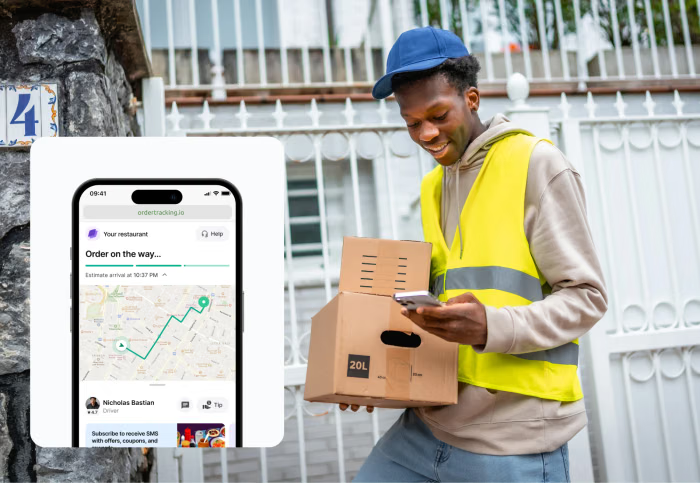
- Live tracking: Managers and customers see progress in real time.
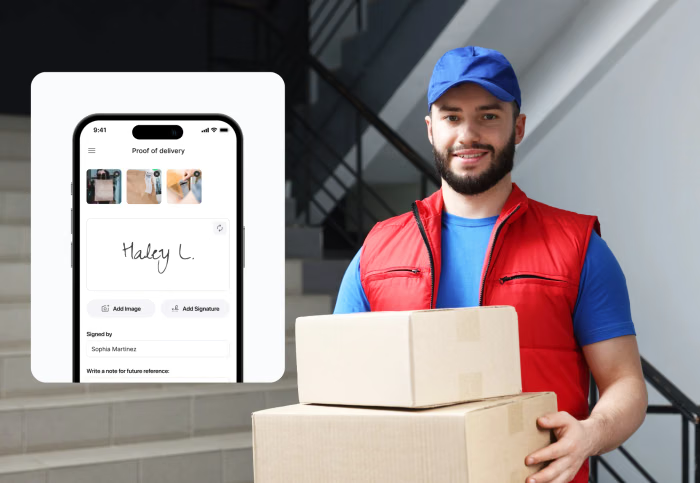
- Proof of delivery: Photos and signatures eliminate disputes.
- Automated communication: Customers receive texts or emails with ETAs and updates.
Grocery delivery automation standardizes decision-making. Instead of relying on intuition, the system ranks drivers by distance and workload, reducing bias and error. Real-time GPS updates replace phone check-ins, freeing managers to handle the store instead of dispatching by hand.
According to McKinsey, grocers using tech for scheduling and logistics can cut labor costs by 10% or more. The right tools don’t just save time—they protect your margins.
5. Run leaner and deliver smarter
Every minute of driver downtime or backtracking is money lost.
With Shipday, you see every delivery in motion and learn from the data:
- Reduced idle time: Optimized routes mean less waiting, more delivering.
- Better staffing: Dashboards show when demand spikes so you can plan labor accordingly.
- Lower costs: Fewer errors, fewer miles, and fewer refund calls.
- More reliable delivery: Retailers using predictive analytics saw a 15% jump in delivery reliability (Gartner, 2023).
Efficiency doesn’t mean cutting corners—it means cutting waste. The best way to improve margins isn’t raising prices—it’s tightening the system.
Over time, those efficiencies compound. Every accurate delivery adds to the data you use for forecasting, scheduling, and inventory planning. When each part of the system feeds the next, you’re not just saving time—you’re building predictability into the business.
Over time, these analytics become an asset. Grocers can see which zones drive the most repeat orders, when demand peaks, or which drivers consistently deliver ahead of schedule. Those insights guide smarter labor planning, route adjustments, and even marketing campaigns. Instead of guessing, you’re managing delivery with data—and that’s where small efficiency gains translate into lasting competitive advantage.
6. Turn every delivery into a customer-loyalty moment
Every grocery order is a small act of trust. The customer’s counting on you to bring their essentials—milk, diapers, produce, dinner for the night—on time and in good shape.
That’s more than convenience. Its reliability and reputation.
One wrong item, one delay, one bag of bruised fruit—and that trust takes a hit. But when the experience is seamless, customers remember the store that made their week easier, not the one that caused a headache.
Communication matters most. Real-time tracking and proactive updates give customers confidence that everything’s under control. A quick text that says, “Your driver’s nearby—your order will arrive in 10 minutes,” does more to build goodwill than any coupon or apology email ever could.
Shipday’s automated messaging and tracking do that heavy lifting for you, turning routine deliveries into brand-building moments.
Reliability consistently ranks above discounts in retail satisfaction surveys. When customers can see progress and communicate easily, they associate your store with competence—even when things run a few minutes behind.
Think about your regulars: the parent rushing between pickups, the older couple counting on their weekly order, the customer who’s sick and can’t make it in. When you deliver right for them, they don’t shop around. They stay loyal. That’s how trust compounds—and that’s what Shipday helps you scale.
7. Managing drivers like a pro
Your delivery drivers are more than logistics—they’re the last touchpoint for your brand. How they show up at the doorstep shapes how customers see you.
Good management isn’t micromanagement, it’s structure and support. Start with clear zones and shifts so no two drivers overlap. Shipday’s dashboard shows every order, driver, and ETA at a glance.
Then focus on training. Drivers should know how to handle frozen, fragile, and fresh products—and how to communicate politely at the doorstep. A short onboarding on packaging and professionalism can prevent costly complaints later.
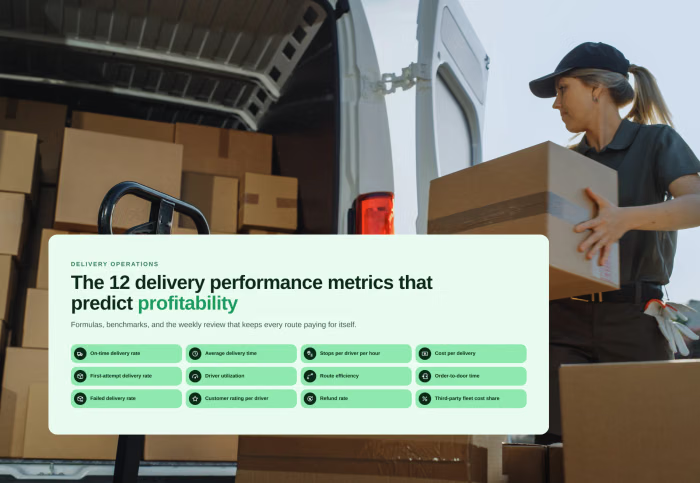
Finally, coach with data. Shipday tracks on-time rates, proof-of-delivery completion, and customer feedback. That visibility helps managers reward top performers and support those who need improvement.
Retention matters. Replacing a driver takes time and money—training, route learning, and inevitable mistakes. Consistent scheduling, transparent pay, and clear communication keep turnover low and morale high.
When drivers feel supported, they perform better. And when customers see consistent, professional service at their door, they don’t just get groceries—they get confidence in your brand.
8. Delivering freshness, speed, and trust—every time
It’s Saturday afternoon before the big game. The parking lot’s full, the store’s humming, and online orders are stacking up by the minute.
Before Shipday, that meant frantic phone calls, delayed drivers, and customers refreshing inboxes for updates that never came.
Now orders flow automatically to available drivers. Managers glance at a live map instead of a whiteboard. Customers get texts when their driver’s nearby, complete with ETAs and proof-of-delivery photos.
The team’s still busy—but it’s organized. Every delivery goes out on time, every customer gets what they ordered, and the store ends the night calm instead of chaotic.
Great delivery isn’t about trucks or tech—it’s about reliability.
When your orders, drivers, and customers are all connected through one system, you gain visibility from checkout to doorstep. Shipday helps grocers run delivery with the same precision as their inventory—fast, organized, and accountable.
As expectations rise, the next wave of direct delivery management will rely on predictive routing, dynamic staffing, and integration with POS systems. The goal isn’t speed for its own sake—it’s reliability that scales.
That’s how small stores build big loyalty: one on-time, perfectly packed order at a time.
Ready to streamline your local grocery delivery?
👉 Explore how Shipday helps grocery stores deliver faster, smarter, and more profitably

Moin IslamCo-founder, CEO
Automating local deliveries globally. Writes about restaurant delivery management, growing delivery business, and managing profitable restaurants.