by Vahag Aydinyan9 min read
AI Dispatch and AI Employees for Local Delivery: What They Actually Automate, and How to Evaluate Them
It's 6:40 p.m. on Friday. Forty orders have come in over the last hour, two drivers are running late, the phone has rung 11 times, and a one-star review just posted. Every delivery software vendor will tell you AI can handle this. Some can, but they have limits.
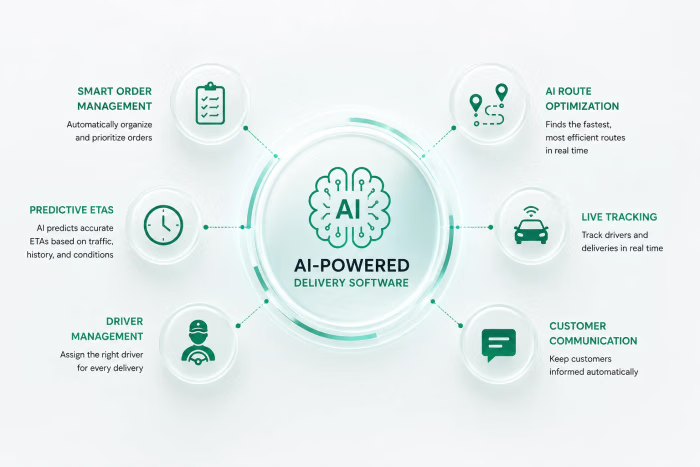
AI in local delivery today is strongest at the work around dispatch, like answering calls, replying to reviews, coaching drivers, and chasing refunds. It's starting to make dispatch decisions too. But a lot of what's sold as "AI dispatch" is just rules-based auto-assignment with an AI label. The question to ask any vendor is which decisions their software makes on its own.
The gap between AI talk and AI in operations is real. At the start of 2026, about one in four operators told the National Restaurant Association they use AI tools, mostly for marketing, and just 6% used AI anywhere near a customer order, according to the 2026 State of the Restaurant Industry report. The back office is moving faster. Restaurant software company Restaurant365 found that 69% of operators it surveyed used AI for reporting and analytics by mid-2026. Delivery operations haven't caught up yet.
What is AI dispatch, and how is it different from automated dispatch?
AI dispatch uses a model to weigh trade-offs and assign orders as conditions change. Automated dispatch follows rules you set. Both assign orders without a dispatcher clicking anything, which is why vendors use the terms interchangeably. They aren't the same thing.
Rules-based auto-dispatch is if-then logic: send the order to the nearest available driver, cap each driver at three orders, keep drivers inside their zone. AI dispatch weighs more at once, such as driver location, capacity, and route, and adjusts as the night changes.
The tradeoff is control. Rules are predictable: the same inputs always get the same result, and when an order goes to the wrong driver, you know which rule sent it. AI decisions shift with conditions, so you spend less time maintaining rules and more time trusting the model, which makes it fair to ask a vendor how it explains a decision.
For a pizzeria with six drivers and a three-mile radius, predictable assignment is often exactly right. AI earns its keep when volume, distance, and timing get too tangled for a handful of rules to sort out.
What can AI employees handle in delivery operations today?
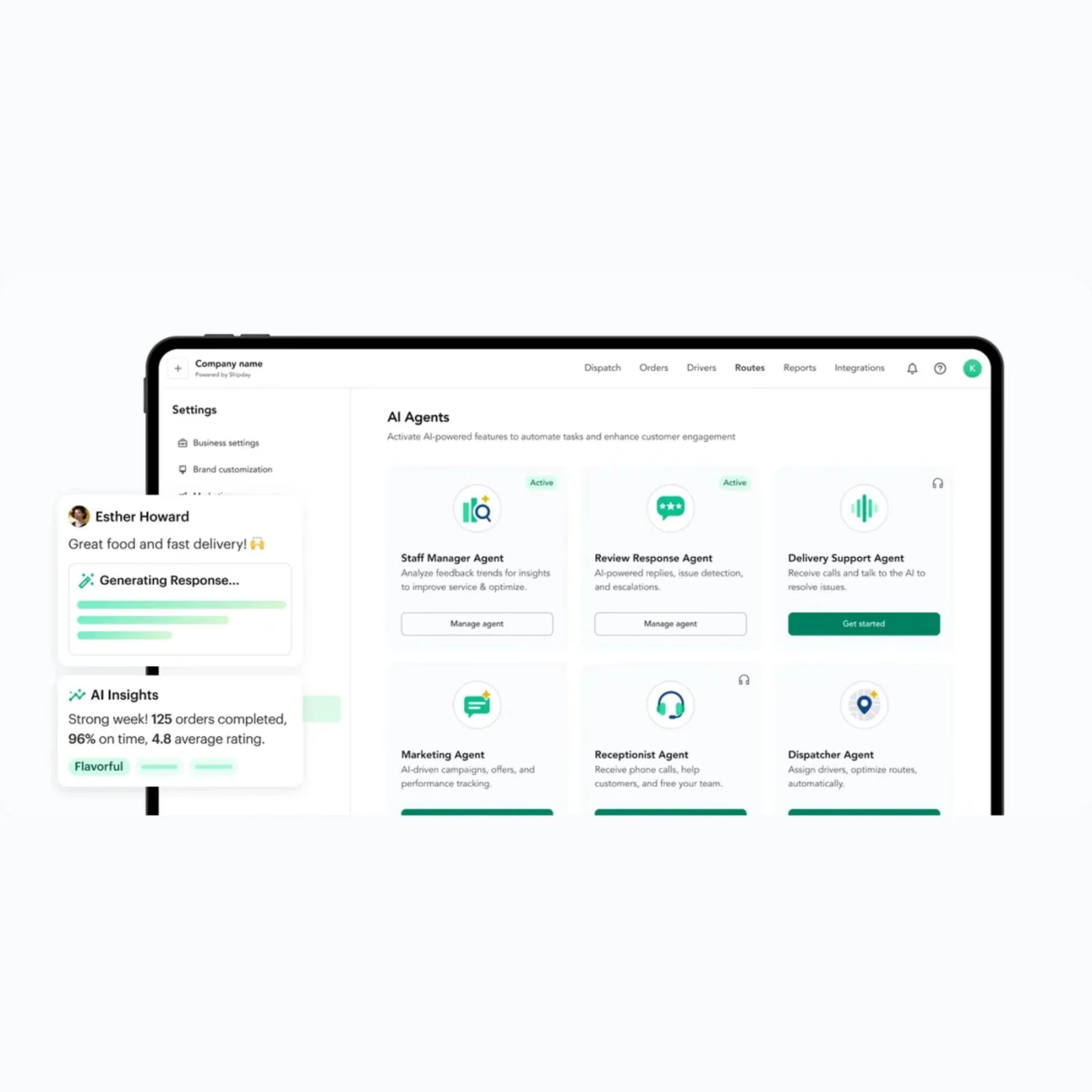
We call them AI employees: agents that take on a whole job, not a single task. Here's what each one does today, and whether it acts on its own or only suggests.
Order assignment and dispatch
Shipday's auto-dispatch assigns orders by rules on the Professional plan and up. Its AI Dispatcher assigns orders in real time based on driver location, capacity, and routing. Ask in a demo how a dispatcher overrides it. For the routing side, see our guide to AI-powered route planning.
Everything after the order comes in
The AI Operations Manager watches every order and driver live, handles problems, and alerts the owner, including by text. In the Shipday Merchant App, owners can also run operations by chatting with an AI Delivery Manager.
Picture a driver stuck in traffic with three orders in the bag. Normally, you find out when a customer calls to ask where their food is. The Operations Manager catches the delay as it happens and flags it to you, so someone can get ahead of it before the phone rings.
Driver coaching
The AI Staff Manager reports on driver speed and efficiency and gives each driver personalized feedback, drawing on the same delivery performance metrics a manager would. It suggests. Human oversight is still required, and managers make the calls.
Review replies
The AI Review Responder replies to reviews in your brand voice, with tone and escalation rules you set. It acts alone on routine reviews and escalates the rest by those rules.
Inbound calls
The AI Receptionist answers 24/7, handles common questions and order status, takes orders, and forwards complex calls to staff. Missed calls are a real leak. In a 2026 study of 12,091 restaurant calls by voice AI company Revmo, quick-service restaurants answered about 60% and fast-casual restaurants about 75%.
Pizza shops answered 93%, which shows the phone can be run well. It just takes people that most restaurants can't spare at 6:40 p.m. on a Friday.
Run the math on a busy night. Say your phone rings 40 times on a Friday and you answer 60%, like the average quick-service restaurant in Revmo's study. That's 16 missed calls. If half of them were orders worth $30 each, that's $240 walking out the door in one night, or more than $12,000 a year from Fridays alone. And most of those callers don't try again: in a 2025 Harris Poll of 2,065 US adults, commissioned by AI phone company Hostie, 69% said they'd likely give up on a restaurant if no one answered.
Refund claims
Refund Collection pairs AI automation with a team of human specialists to recover marketplace refunds, and you pay only when money comes back. Our success rate runs 97% to 99%. For the evidence side of a dispute, see our guide to proof of delivery software.
Which delivery decisions should AI make, and which should it only suggest?
Think of AI autonomy as a ladder. The first rung is something like adaptive cruise control: the system holds one variable while you still drive. The top rung is a system that runs the whole job.
Climb by risk. High-volume, low-risk, and easy to undo work is a good candidate for AI to handle alone. These might be status calls, routine review replies, and order assignment in a simple zone. Decisions that are high-stakes or hard to take back should keep a person in the loop. That includes disciplining a driver, disputing a large refund, and answering a furious customer.
Customers are on the low rungs too. In a June 2026 Checkout.com study, 65% of US consumers said they'd trust AI to compare prices, but only 14% would trust it to place an order on its own.
The biggest payoff comes from handing AI a whole workflow, like the phone line, instead of one-off tasks. Operators already using AI are seeing it in the labor line. In Restaurant365's mid-year 2026 survey of more than 420 operators, 62% of active AI users reported lower labor costs. We expect our AI employees to become fully autonomous as models improve, which means they aren't at the top rung yet. Any vendor claiming its AI already runs everything deserves a follow-up question. Most operators told the NRA they see technology as something that helps their staff, not something that replaces them.
How do you evaluate AI delivery software?
Bring a short list of questions to every demo, and make the vendor answer each one specifically. If you're shopping because you feel behind, you're not alone: 28% of operators told the NRA their technology lags their competitors'.
- Which decisions does it make on its own, and which does it only suggest?
- Can a dispatcher override it in real time, and does it learn from those overrides?
- What data does it learn from: your history, pooled data from other customers, or neither?
- What's AI and what's rules? Ask the vendor to name both.
- What happens when it's wrong, and who gets notified?
- Which features are live, and which are on the roadmap?
- Which plan includes the AI features?
If a vendor can't answer the fourth question, that's your answer.
How do Shipday's AI features answer that checklist?
Here's how our AI features answer those seven questions.
| Task | Shipday feature | AI or rules | Acts alone or suggests | Plan |
|---|---|---|---|---|
| Order assignment | Auto-dispatch | Rules | Acts alone | Professional and up |
| Dispatch decisions | AI Dispatcher | AI (driver location, capacity, route) | Acts alone | Business AI |
| Everything after the order comes in | AI Operations Manager | AI | Acts and alerts the owner, including by text | Business AI Lite and up |
| Running ops from a phone | AI Delivery Manager (Merchant App) | AI | The owner directs it by chat | Business AI Lite and up |
| Win-back and promotions | AI Growth Manager | AI | Suggests; human oversight required | Business AI Lite (merchant plans) |
| Driver coaching | AI Staff Manager | AI | Suggests; human oversight required | Business AI Lite and up |
| Review replies | AI Review Responder | AI | Acts alone on routine reviews; escalates by your rules | Business AI Lite and up |
| Inbound calls | AI Receptionist | AI | Acts alone on common calls; forwards complex ones | Business AI |
| Refund claims | Refund Collection | AI plus human specialists | Acts alone as a managed service | Pay only on recovery |
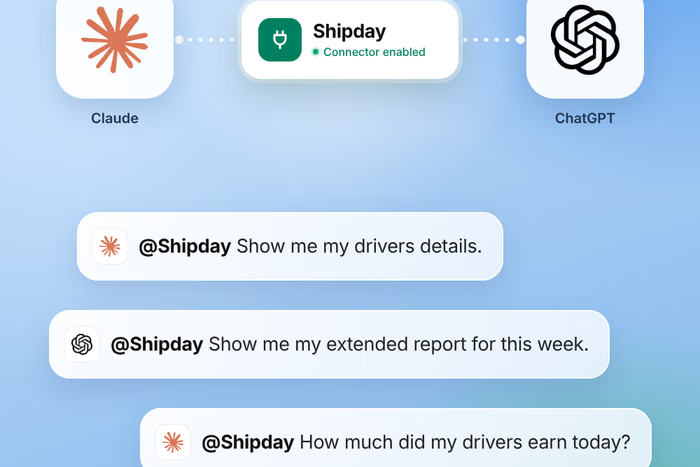
| Updates in your AI assistant | Claude connector, ChatGPT plugin, MCP server | Integration | Answers questions; creates, edits, and deletes orders | All plans |
You can turn each agent on or off individually. Plans vary by business type, so check Shipday's pricing for yours.
Back to that Friday
At 6:40 p.m., the late drivers, the ringing phone, and the one-star review are separate jobs. You don't have to hand all of them to AI at once. Start with the job that leaks the most money. (Hint: it's the one that's still ringing.) Start on Shipday's free plan, or book a demo to see AI employees work on your own orders.
Start with the job that leaks the most
See AI employees work on your own orders, from the phone line to dispatch.

I am writing about content marketing, marketing trends, restaurant technology, tips on restaurant management and more.