


.png)
Independent grocery stores that run their own delivery teams need user-friendly real-time dispatching, live driver tracking, and customer communication tools. The ability to hail third-party drivers can help growing grocers manage holiday or weekend spikes without hiring extra drivers.
We reviewed 20+ delivery management platforms and narrowed the list to the six best delivery software tools for grocery stores. Our evaluation prioritized a permanent free plan, automatic driver dispatch, and integrations with grocery e-commerce and POS systems. Full scoring details appear at the bottom of this guide.
Grocery Delivery Software Compared
1. Shipday: Best Overall Grocery Delivery Software
.png)
Shipday ranks first for independent grocery stores because its baseline subscription is free, (forever) for up to 300 deliveries per month. That’s enough capacity for most independent grocers launching delivery for the first time. It also includes AI-powered dispatch and pre-built e-commerce integrations that cover the full delivery workflow at the lowest entry cost on this list. Shipday connects directly to Shopify, WooCommerce, Square, and other platforms, so online grocery orders flow into the dispatch dashboard without manual re-entry.
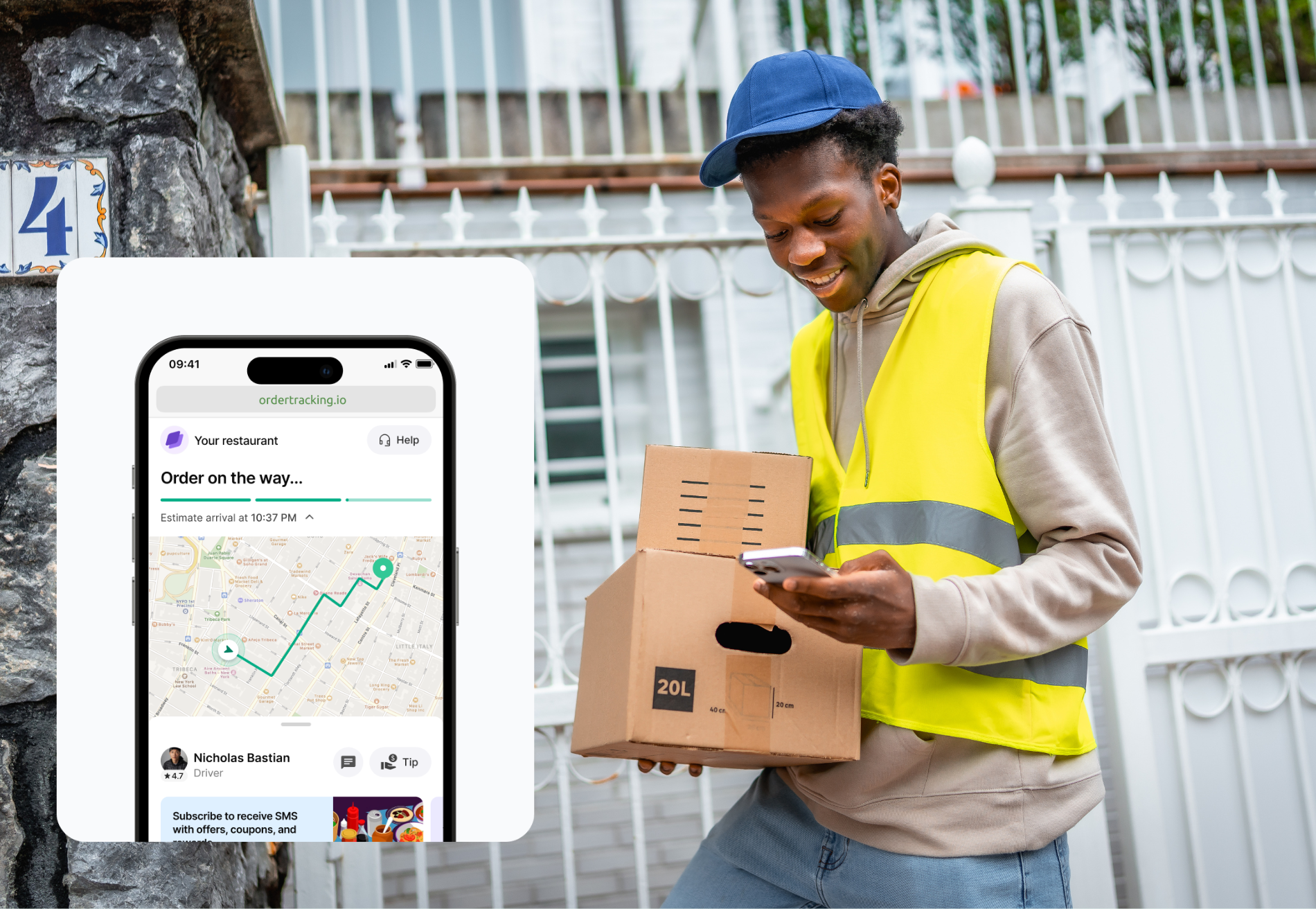
Shipday's dispatch workflow assigns orders to drivers automatically based on proximity and availability, reducing the need for a dedicated dispatcher. When order demand exceeds your in-house driver capacity, you can hail on-demand third-party drivers through DoorDash Drive and Uber Direct from inside the platform. Most Shipday users operate their entire delivery workflow from a smartphone.
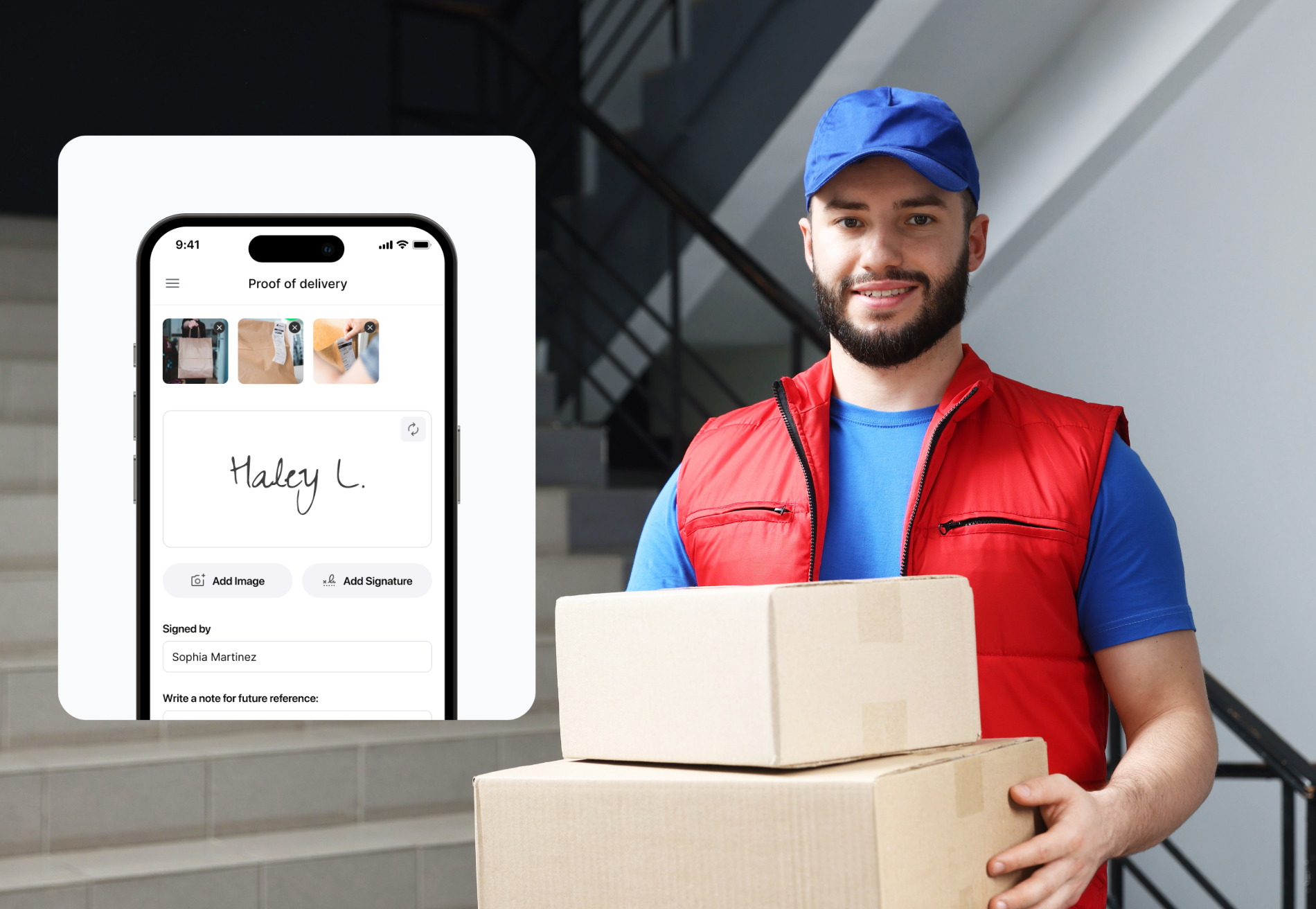
The driver app supports 25+ languages. Proof-of-delivery photos, live GPS tracking, and automated SMS updates to customers are included on every plan. Grocery stores scaling beyond the free tier can upgrade to paid plans starting at $39 per month. Shipday does not have standard grocery-supporting functions like built-in payment processing or expiration date tracking. Users who need these functions will need to use Shipday alongside a traditional POS system.
Shipday Customer Reviews
2. Routific: for Multi-Stop Planned Routes
Routific specializes in route optimization for high-stop-count delivery runs, which works well for grocery stores running routes with 10 or more stops per driver. The algorithm sequences stops for efficiency and adjusts routes as conditions change. Routific offers a free tier covering up to 100 deliveries per month (compared to Shipday’s 300 included free deliveries). Paid plans start at a flat $150 per month for up to 1,000 orders; per-order pricing applies above that threshold.
Routific charges for customer notifications on a per-vehicle basis, on top of the base subscription. A Capterra reviewer noted that notification pricing “feels exorbitant” for small operations with multiple active drivers.
Routific Customer Reviews
3. Tookan: for Grocers Needing Flexible, Customizable Dispatch
Tookan is a delivery management platform with a configurable dispatch system and a large integration library. Tookan supports automated task assignment, real-time GPS tracking, proof of delivery, and a driver mobile app for iOS and Android. Pricing starts at $129 per month. Tookan does not offer a permanent free tier, though a 14-day trial is available.
Tookan's initial setup can be overwhelming due to the volume of configuration options. A G2 reviewer noted that “it took me some time to fully understand all the features.” Core features like route optimization require paid add-ons beyond the $ 129-per-month base price.
Tookan Customer Reviews
4. Onfleet: for Regional Grocery Operations
Onfleet is a last-mile delivery platform built for high-volume, multi-location delivery operations that need enterprise-level performance reporting and multi-team management alongside advanced route optimization. Drivers can capture several types of proof of delivery, including photos, signatures, barcodes, and ID verification. Pricing starts at $599 per month. Onfleet does not offer a permanent free tier.
Onfleet's $599 per month starting price puts it out of reach for most independent grocery stores. A senior product manager on G2 also reported that Onfleet's SMS notifications and calls to customers “often get flagged as spam, which creates big problems.”
Onfleet Customer Reviews
5. Spoke Dispatch: for Fixed-Route Grocery Delivery
Spoke Dispatch (formerly Circuit for Teams) is route planning software for grocery operations that run consistent, pre-planned delivery routes with a stable stop list. Spoke Dispatch handles route creation, driver app assignment, and customer delivery notifications. Pricing starts at $125 per month for up to 1,000 stops; additional stops are billed at $0.04 per stop beyond the plan limit. Spoke Dispatch is better for grocers running predictable, scheduled delivery routes than for on-demand or same-day grocery delivery.
Spoke Dispatch does not offer pre-built integrations with grocery e-commerce or POS platforms. Connecting Spoke to Shopify, WooCommerce, or any other system requires custom API development. Independent grocery stores without developer resources will need to enter orders manually.
Spoke Dispatch Customer Reviews
6. Shopify Local Delivery: for Shopify-Based Grocery Stores Starting Delivery
Shopify Local Delivery is a built-in delivery feature included with all Shopify plans at no extra cost. The app lets store owners define delivery zones by radius or postal code, create optimized delivery routes, and share those routes with drivers through a dedicated iOS and Android app. Drivers can access directions, update delivery statuses, and send customer notifications from the app.
Shopify Local Delivery does not include automated or AI-powered dispatch; store must owners assign orders to drivers manually. The app does not offer live GPS tracking visible to customers or proof-of-delivery photos, and there is no connection to third-party driver networks like DoorDash Drive or Uber Direct. Shopify community users consistently describe the tool as a functional starting point that most stores outgrow once delivery volume exceeds a handful of orders per day.
Shopify Local Delivery Reviews
Marketplace Delivery Options
Third-party marketplace platforms are what many people think of when considering grocery delivery. We did not score these tools in our ranking because they are not true grocery delivery management platforms. Marketplace platforms connect stores to a pool of gig-worker drivers in exchange for per-order fees or commission percentages. Stores using marketplace platforms give up control over the driver relationship and the customer experience.
Instacart
Instacart allows independent grocery stores to offer online ordering and same-day delivery through Instacart's shopper network. Instacart shoppers pick and deliver orders on behalf of the store. Stores earn revenue per order but pay a commission per sale and have limited control over the delivery experience and customer relationship.
DoorDash Drive
DoorDash Drive is DoorDash's white-label delivery service that allows grocery stores to offer delivery through DoorDash's driver network without listing on the DoorDash Marketplace. Stores pay a flat per-delivery fee rather than a percentage commission. DoorDash Drive handles driver dispatch; grocery stores retain their branded customer experience.
💡 Stores that opt for top-rated Shipday can manage their own drivers and hail third-party drivers on demand through a single platform.
Frequently Asked Questions
What is the difference between delivery management software and marketplace grocery delivery?
Delivery management software like Shipday gives grocery stores direct control over their own drivers and customer communication. Marketplace platforms like Instacart or DoorDash Drive handle delivery through third-party driver pools in exchange for per-order fees or commissions. Some platforms, including Shipday, let grocery stores do both: dispatch their own drivers for daily orders and hail third-party drivers on demand for peak periods.
What should a grocery store look for in delivery software?
The five features that matter most for independent grocery stores are automated driver dispatch, real-time customer delivery notifications, route optimization, proof-of-delivery photos, and direct integration with the store's existing e-commerce or POS platform. Stores that experience demand spikes on weekends or holidays should also confirm whether the platform supports on-demand access to third-party drivers.
Does Shipday work for grocery store delivery?
Shipday supports local delivery operations across grocery stores, restaurants, pharmacies, and courier services. Shipday integrates with Shopify, WooCommerce, and Square, so grocery stores with online ordering can connect their storefront directly to Shipday's dispatch tools.
Does Shipday have a free plan for grocery stores?
Shipday's free plan covers up to 300 deliveries per month with up to 10 drivers. Paid plans begin at $39 per month for stores that need additional capacity or features.
Does Shipday integrate with grocery store e-commerce and POS systems?
Shipday connects directly to Shopify, WooCommerce, Square, Lightspeed, MICROS, and additional platforms. Online orders placed through these systems automatically appear in Shipday's dispatch dashboard, removing the need for manual order transfer between the storefront and the delivery layer.
How We Evaluated
We reviewed grocery delivery software platforms and assessed each against five criteria drawn from the operational needs of independent grocery store owners managing their own delivery. We prioritized tools with low or no entry cost, fast setup, and features relevant to grocers without dedicated logistics or IT staff.
- Entry-Level Cost: We looked for platforms offering a permanent free tier or an entry-level subscription below $50 per month.
- Dispatch and Route Optimization: We rewarded platforms that include real-time driver dispatch, route optimization, and multi-driver support. We awarded the highest scores to systems with auto- or AI-supported dispatch tools.
- Real-Time Tracking and Customer Notifications: We assessed whether each platform provides live driver GPS tracking and automated SMS or email delivery updates to customers.
- Ease of Setup: We evaluated onboarding complexity based on customer reviews and publicly available documentation.
- Integration Compatibility: We looked for platforms that connect directly to common grocery e-commerce and POS systems, including Shopify, WooCommerce, and Square, without requiring custom APIs.
All pricing and features were verified in March 2026.
Bottom Line
Shipday earns the top ranking for grocery delivery software because it is the only platform on this list that combines a permanent free tier, AI-powered dispatch, and pre-built POS and e-commerce integrations in a single tool at the lowest entry cost.
- Shipday's free plan supports 300 orders per month, covering the volume most independent grocery stores need when launching delivery.
- Shipday integrates with Shopify, WooCommerce, Square, and more, so existing online orders route directly into the dispatch stream with zero manual re-entry.
- Shipday's driver app supports 25+ languages, an advantage in grocery delivery markets with diverse driver pools.
- Integrations include on-demand third-party driver platforms, keeping grocery operations moving without hiring seasonal staff.
If your grocery store is ready to launch or scale delivery without marketplace commissions, Shipday is the fastest path to owning your delivery operation. Start free today and see how Shipday can streamline your delivery operations.




.avif)
Table of contents
Related articles
Ready to get started?
Play around with it first, add your team, pay later.


%201.svg)

.svg)