

How Propane Delivery Companies Can Scale Without Adding Trucks or Headcount


It’s early January. A cold snap hits the Midwest, and overnight lows are in the single digits. By 7am, your phone is going, customers are running on empty, cold, and panicking. One driver calls out, and the other two are three hours into routes you haven't heard from since dispatch. You have no idea which stops are done, which are behind, and whether the woman on hold has enough in the tank to make it through the night.
That's the real scaling problem in this business. Not trucks or headcount. Two things: you don't know that enough stops are being completed each day, and you don't know what's happening while they're being run. In twenty years of running routes, neither one had to be built — you had two drivers who knew every tank by heart. The propane trade press calls it tribal knowledge — the critical operational memory that lives in one person's head and leaves when they do. Call him Uncle Steve. Every propane company has one.
What follows is how to build what's underneath.
The stop count math most operators never run
According to propane drivers on TruckersReport, a driver in a dense suburban area can complete 40–60 stops per day. The same driver on a rural route with poor sequencing might do 15–20. The gap comes from the order of the stops.
Operators who've recalculated their routes report recovering 8–10 stops per driver per day. Run that math on a four-driver operation: that's 32–40 deliveries per day that were disappearing without anyone noticing. Over a five-month heating season, that's thousands of gallons you didn't deliver — without running out of trucks or drivers. You ran out of route efficiency.
Routes rarely start inefficiently, but they drift over time. A customer added here, one removed there, a road closure was rerouted manually, and never fixed. Propane Insider put it directly: stops that were once geographically logical slowly spread apart, and drivers keep sequencing by memory rather than recalculation. A five-mile detour may feel trivial, but multiplied across 20 routes over a heating season, it becomes a measurable line item in diesel, overtime, and missed capacity. The operators who close that gap recalculate before adding a bobtail to the fleet.
The problem with tribal knowledge
Route drift is partly a software problem. But tribal knowledge — the operational memory that lives in one person's head — is the harder fix.
Every propane company has one. The person who knows which customer has an underground tank in the back corner of a three-acre lot. Who knows, the farm customer requires a 150-foot hose pull because the truck can't get close to the tank. The problem is it lives in one person's head, and the day he doesn't show up, it's gone.
The job requires hazmat and tanker endorsements, which narrows the candidate pool. When someone does leave, paper-based operations have no way to transfer what they know. The route notes, if they exist at all, are handwritten on printouts in a filing cabinet.
The fix is to capture institutional knowledge in a system, not with a person. Per-stop notes in a driver app — tank location, access instructions, special hazards — mean the next driver doesn't have to start from scratch. A new hire can run an experienced driver's territory on day one with the same context.
Why auto-fill doesn't fix your routing problem
If your operation has been growing its auto-fill base, you might assume your routing is getting more organized — the schedule is handled, the customers aren't calling to set up fills, and deliveries are triggered automatically. That assumption is wrong, and it's one of the most common reasons route efficiency collapses.
Auto-fill schedules deliveries are usually based on degree-day forecasting. It’s a prediction that triggers a delivery when each tank needs a refill, based on weather and historical consumption. What it doesn't do is account for geography. It doesn't know or care where that customer sits relative to every other customer triggering that same week.
The result may look like this: a driver gets dispatched to three customers whose usage signals fired on the same day, all 40 miles apart in three different directions. The fill schedule is optimized, but the route is a mess.
The fix is route optimization software that sits on top of the fill schedule. Instead of dispatching whoever triggers today, it looks at the full picture — who needs a fill this week, where they all are, and how to sequence them into efficient geographic routes. One customer's trigger date might shift by a day or two. The route gets half the miles, saving you time and money.
"I'll call the driver and check" isn't a system
Fix the routes, capture the knowledge, layer optimization on top of auto-fill — and you've solved the efficiency side. What you still don't have is visibility into what's happening while the routes are running.
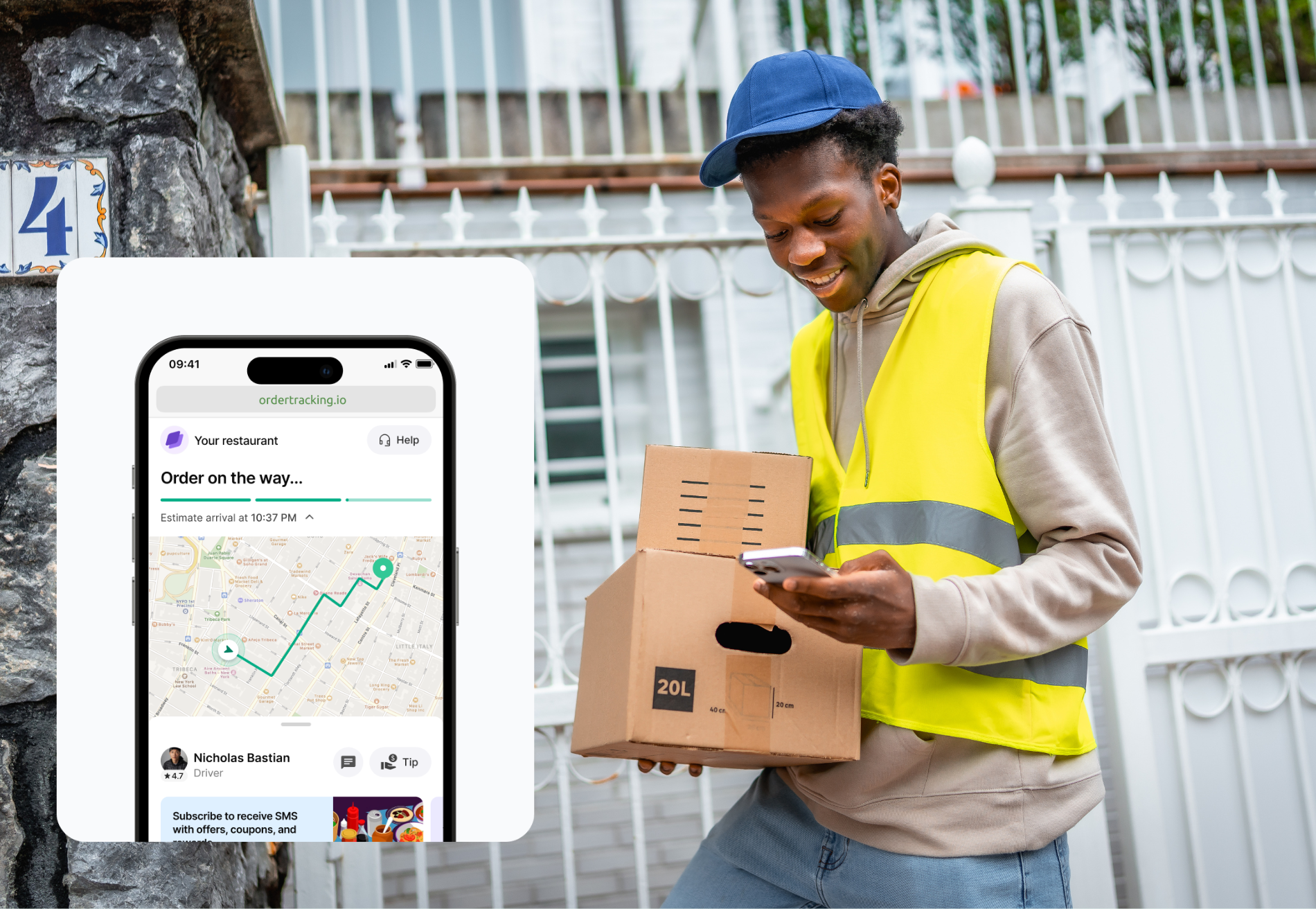
Real-time driver tracking changes the nature of the question. You already know. You can proactively notify customers before they call — "your driver is currently three stops away" — and cut the inbound volume at the source. The customer who gets an ETA before they think to call isn't angry. It also changes what you can do when something goes wrong. If a driver is running behind, you can see that at 10 am and make a dispatch decision — not at 3 pm when the backlog is already a problem and people need fuel to heat their homes.
What a run-out actually costs
When a residential tank empties completely, service can't simply resume with a fill. A safety inspection and full system purge is required before gas can flow to appliances again. According to the U.S. Energy Information Administration, U.S. propane inventories drew down approximately 22 million barrels in January 2025 — the largest monthly draw since January 2017. On top of the propane cost, published fee schedules from propane retailers show out-of-gas service calls running several hundred dollars before the tank is even filled — plus the leak check that's required before service can be restored.
The customer who runs out isn't just unhappy. They may be actively looking to switch providers. And if they're on your auto-fill program, their case is clear: you failed the basic promise.
The big national providers — AmeriGas, Suburban, Superior Plus — have auto-fill programs and modern scheduling systems, and their customers still run out. AmeriGas Trustpilot reviews are full of auto-fill customers describing exactly this — tanks running empty mid-winter despite being on automatic delivery. 600+ reviews, and 1.1 stars on average. Superior Plus Propane wrote its "No Run Out Commitment" terms to explicitly define a "Customer Service Failure" as including "inaccurate tank monitoring or scheduling/dispatch errors." The operator's fault, in their own words.
Your edge over AmeriGas is that you actually know your customers. They have the scale and the technology, but the promise still gets broken. But the big national failures don't matter if you can't see the route well enough to get there first. Real-time visibility is what closes that gap — when you can see a driver running two hours behind on a route with low-tank customers, you can act before the phone rings.
The proof-of-delivery problem
Proof of delivery solves both a billing problem and a run-out liability problem — and creates route performance data most operators don't currently have.
You sent the driver. The tank got filled. You're sure of it. The customer says it didn't happen. Without a timestamped record, GPS-confirmed location, and photo, that dispute is a coin flip. Someone eats the cost of a second delivery, or the relationship ends over a billing dispute that shouldn't have happened. If a customer claims they ran out on auto-fill, delivery documentation — when the tank was filled, to what level, GPS-verified at the address — is the difference between a defensible position and a he-said-she-said. It also tells you how long each stop actually takes, which customers run long, and where the route is spending time it shouldn't.
What this takes
Most purpose-built propane platforms — Advantage Route, Manage Petro, Perfict — were built for mid-market distributors, with features and support for billing, inventory, CRM, and compliance. For a 50-truck operation, it’s the right call. But for 3–8 bobtails, it's expensive, complex, and would take months of onboarding and setup before it deems itself useful.
What a small operation actually needs:
- Route optimization that sequences stops geographically and works with your auto-fill schedule
- Real-time driver tracking so you can see what's happening without calling
- Per-stop notes that capture what your drivers carry in their heads
- Automated customer notifications so ETA questions get answered before they become calls
- Proof of delivery with GPS timestamp and photo
Shipday is built for this — for the operator running 3–8 bobtails who needs last-mile visibility without a six-month implementation or a $1,000/month contract. The propane industry isn't short on software. It's short on software built for operators who are still driving routes themselves in January.
The operators who scale aren't the ones who buy another truck when volume spikes. They're the ones who've built enough into the operation that each truck is doing as much productive work as possible before adding the next one. The ones who have drivers visible, capture institutional knowledge, and know their clients. Another cold snap will come around again. The only question is whether you're ready for it.
[See how Shipday works for propane delivery operators →]
Frequently asked questions
What is route drift in propane delivery? Route drift is the gradual inefficiency that accumulates as a delivery route evolves. New customers get added, old ones removed, roads get rerouted but the stop sequence is never recalculated. Drivers keep running the route by memory, and small detours compound into significant lost capacity over a heating season.
Does auto-fill improve route efficiency for propane companies? No — auto-fill often makes routing less efficient. Schedules are built on degree-day forecasting, which triggers deliveries based on predicted consumption, not geographic proximity. Customers can trigger the same week even when they're 40 miles apart. Route optimization addresses this by batching geographically close customers to the same route day regardless of when their individual signals fire.
What happens when a propane tank runs completely empty? When a tank empties completely, service cannot resume with a standard fill. A certified technician must perform a full safety inspection and system purge before gas can flow to appliances again. This process can take several days and has been documented costing customers $350 or more.
What software do small propane delivery companies need? Small operators (1–10 bobtails) need five things: route optimization that accounts for geography rather than just fill schedules, real-time driver tracking, per-stop notes, automated customer notifications, and proof of delivery with GPS and photo. Most purpose-built propane platforms were designed for larger distributors and carry ERP-level complexity small operators don't need.


.avif)
Table of contents
Related articles

Ready to get started?
Play around with it first, add your team, pay later.


%201.svg)

.svg)