


How Romeo's Pizza Cut Labor 4% and Tripled Five-Star Reviews with Shipday
4%
60+
10+
Romeo's Pizza
Central Ohio (Columbus area)
2009
2024
13 locations
About
About
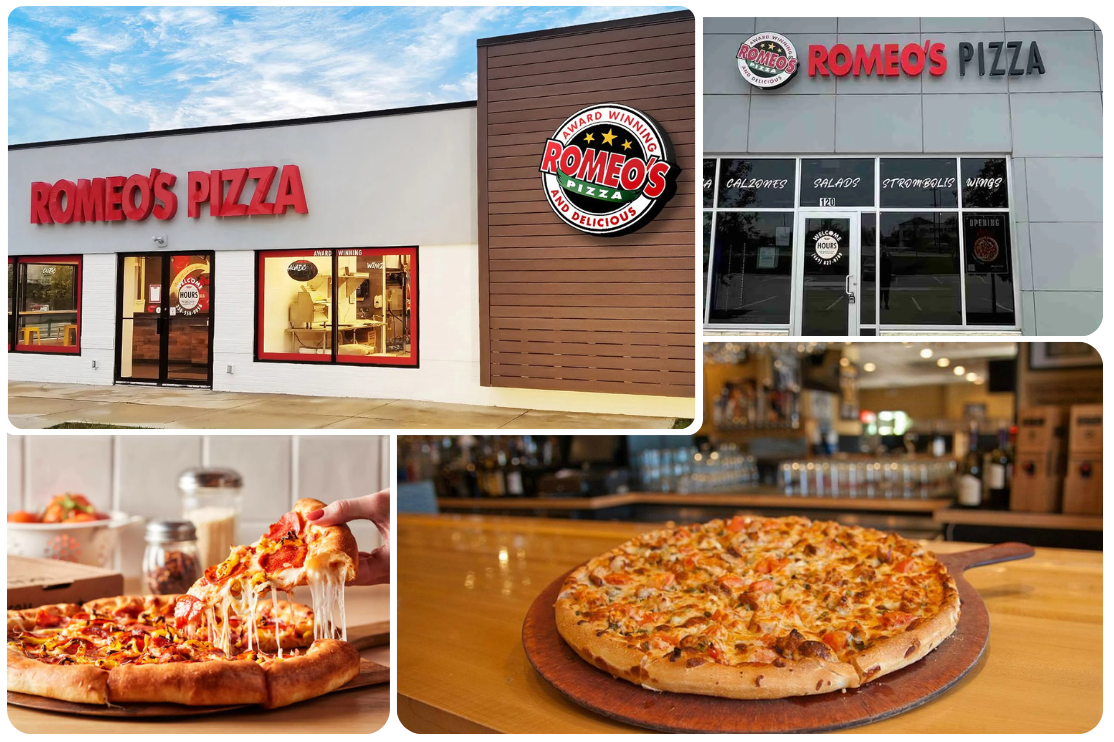
Romeo's Pizza was founded in 2001 in Medina, Ohio, on a simple belief: great pizza brings people together. The brand is known for handcrafted pies, dough made fresh daily, a 100% Wisconsin cheese blend, and an award-winning Buffalo Chicken pizza. The signature sweet sauce is what keeps customers coming back. It starts with California tomatoes picked at peak ripeness and packed from field to can within ten hours, with a full year's worth made over 70 days in Modesto.
Today Romeo's runs through local franchise groups across Ohio and beyond. In Central Ohio, Jeff Schoolcraft operates one of those groups, and his experience shows how much the delivery side of the business has changed.
Jeff Schoolcraft came to Romeo's in 2018 as an operating partner after twenty years at Papa John's, where he started as a delivery driver and worked his way up to district manager. When he joined, the brand had seven locations. It now operates thirteen.
Jeff has seen the delivery side of pizza from every angle. He has driven the routes, managed the drivers, and run the dispatch screen during dinner rushes. That history is what made him skeptical of third-party delivery at first, and what eventually convinced him to commit to it fully.
About
About
Challenges before Shipday
For years, Romeo's ran on the traditional pizza-shop model: in-house drivers, dispatched from the counter, paid per run. That model started breaking down around 2020 and never fully recovered.
Driver staffing got harder every year
Once DoorDash and Uber Eats started recruiting drivers at scale, every restaurant in the country was suddenly competing for the same pool. "You're competing with all those companies to find drivers," Jeff said. On top of pay, in-house drivers were expected to help with prep and cleaning between runs. Third-party drivers could pick their own hours and just deliver. Romeo's kept losing to the easier job.
Demand spikes had no answer
A snowstorm or a rainy Friday could double the ticket count. With two or three drivers on staff and only a couple available that day, the math stopped working. "If you get that influx in deliveries, you don't have the drivers there to properly service it," Jeff said. The in-house drivers would stack three and four orders together to capture the volume, which hurt customer experience. The store had no way to absorb the surge.
Driver labor was mostly waste
A driver on the clock from 10 a.m. open to 11 p.m. close was actually on the road for a few hours total. The rest was waiting. Multiply that across thirteen stores and the labor cost was sitting in the lobby, not moving pizzas.
Leased cars made the math worse
During the pandemic, Romeo's tried leasing vehicles so drivers wouldn't need their own. The fixed cost was high and the liability followed it. Damaged cars and accidents added more to the bill on top of the lease itself.
Customer recovery fell to the wrong people
When something went wrong with a third-party DoorDash Drive order, the manager was making pizzas or running the cut table. They didn't have time to call DoorDash, sit on hold, and fight for a refund or a driver block. So they refunded the customer out of Romeo's pocket and remade the order, eating the cost. The third-party platform never heard about it.
"We can text Shipday directly and say, hey, we need this order refunded, we need this driver blocked, we need to re-drop the order. It's all very seamless and very quick."
About
About
Shipday gave Romeo's an on-demand driver network plus the operational tools to actually use it without losing money or service quality.
Unlimited drivers, on every shift
The driver bench is no longer a fixed cost. "We have unlimited drivers at our disposal," Jeff said. "If we have a huge increase in sales on a day, we know that those drivers are out there." Surge days that used to overwhelm a thin in-house roster now route through the same system as a Tuesday lunch.
A simpler shop to run
At the Grove City location, where Jeff eliminated in-house drivers entirely, the staff count dropped from 13 or 14 people to 7 or 8. The shift manager no longer has to dispatch, route, balance who takes what run, or police drivers cherry-picking the lucrative stops. They make pizzas, take orders, and get food out the door.
Refunds and driver issues handled in seconds
When something goes wrong, the manager doesn't sit on hold. They tap the app or text Shipday directly: refund this order, block this driver, re-drop this delivery. The fix happens while the store keeps running.
A 10-mile delivery radius
Romeo's traditional trade area was roughly three to four miles, anything within a ten-minute drive. Shipday's expanded radius opened up sales the store would never have taken before. The weekly volume from the 5-to-10 mile zone is meaningful and additive.
Review generation built into the platform
Five-star Google reviews moved from a handful per month to 60-plus per store across a three-month window. Internal feedback that doesn't go public exposes operational gaps the store can actually fix.
"Being able to expand the delivery area out to a 10+ mile radius has been beneficial. On a weekly basis, there's a significant amount of deliveries that we're taking that we never would have taken when the default radius was 1-3 miles."
Before and after Shipday
Challenges before Shipday
With Shipday
"I just went all in. I eliminated the full time drivers altogether, I eliminated the cars altogether. And it's been very good for us since then."
Benefits and early results after implementing Shipday
The turning point at Grove City location
Jeff didn't start by going all-in. He dipped a toe at one location, running Shipday alongside the existing in-house drivers. The hybrid setup was hard to manage. Eventually he made the call: cut the drivers, sell the leased cars, and run the store on Shipday. Grove City became the proof.
2025 was the first full year that the store operated without any in-house drivers.
"We saw labor percent come down 4% for the entire year."
That is the kind of number that holds up across thirteen locations. The Grove City model is the playbook now
A near-cancellation that became the breakthrough
There was a moment when Jeff was ready to pull the plug. He looked at the customer reviews and was about to call it. He reached out to Dylan at Shipday, who pushed back: look at what the reviews are actually saying.
Jeff spent a couple of Fridays at the Grove City counter himself, handing orders to the drivers personally. The deliveries went smoothly. The issues weren't the drivers. They were operational gaps inside the store that the customer feedback had been pointing at all along.
"The issues were us. We had operational issues that these reviews were identifying that we just needed to fix. Once we fixed those, everything worked great."
The internal feedback loop became one of the most valuable parts of the platform. Without Shipday's review system, those operational shortfalls would have stayed hidden behind a handful of public one-star reviews.
Review ratings and visibility
Grandview's overall Google rating moved from roughly 4.1 to 4.4. Grove City and Reynoldsburg both climbed to 4.3. Across those three stores, the volume of fresh five-star reviews drowned out the occasional negative one.
"Our Google review score went from 4.1 to 4.4 in a matter of 4 months. This significantly improved the reputation and visibility of our locations."
Higher ratings plus an expanded radius is a compounding effect. More search visibility pulling from a larger geographic pool means revenue gains that don't show up on a single line item.
Why the model works for the industry
Jeff frames it as a long-term operational philosophy, not a vendor choice. Drivers are harder to recruit every year. Good managers are harder to find. The shops that survive are the ones that get simpler to run.
"For Pizzerias, you have to simplify these operations as much as you possibly can in order for it to be profitable. That's what I like about it. It's just making running these shops simpler for the people we put in there."
An 18-year-old promoted to shift manager doesn't need to know the delivery zone, dispatch logic, or how to keep a roster of drivers happy. The job becomes: make the food, get it ready on time. Shipday handles the rest.
Reflections & recommendations
Jeff's advice for operators thinking about the move is direct: if you're going to do it, commit. The hybrid model, in-house drivers plus Shipday running in parallel, is harder to manage than either one alone. The wins compound when the driver layer is fully outsourced and the store focuses on food and service.
"It's a lot easier if you just go all in and you don't have drivers. Shipday's a lot easier to use. The implementation is pretty seamless. Anytime I need anything, Dylan answers the phone and figures out a solution."
Through Shipday, Romeo's turned its delivery operation from a staffing problem into a growth lever, and built a model that scales across all thirteen locations.
Recommended case studies




Ready to get started?
Play around with it first, add your team, pay later.


%201.svg)
