

Which delivery management solution delivers the best real-time tracking for route visibility?


According to research by Mckinsey, about half of US shoppers now track an order while it's in transit, checking that it's moving and staying on time rather than just waiting for it to land. That habit has reset what people expect from anyone who delivers, including the local restaurant or shop down the street. The moment it goes wrong is familiar to any mid-size delivery operation; a customer calls to ask where their order is, and no one on the team can give a straight answer.
For small and mid-sized local delivery operations that run their own drivers and want customers to watch the delivery happen live, Shipday is the strongest fit on real-time tracking and route visibility. Shipday puts a live dispatcher map and branded customer tracking links on a free plan that covers up to 300 orders a month, with photo and signature proof of delivery built in. Large fleets that coordinate many third-party carriers will get more from enterprise platforms like Bringg, FarEye, or DispatchTrack. This comparison evaluates six delivery management platforms on two visibility requirements: operational tracking for dispatchers and delivery tracking for customers
What real-time tracking and route visibility actually mean
Real-time tracking and route visibility describe two different views of the same delivery.
- Route visibility is the operational view, the live map a dispatcher uses to see where every driver is, which stops are done, and where the day is falling behind.
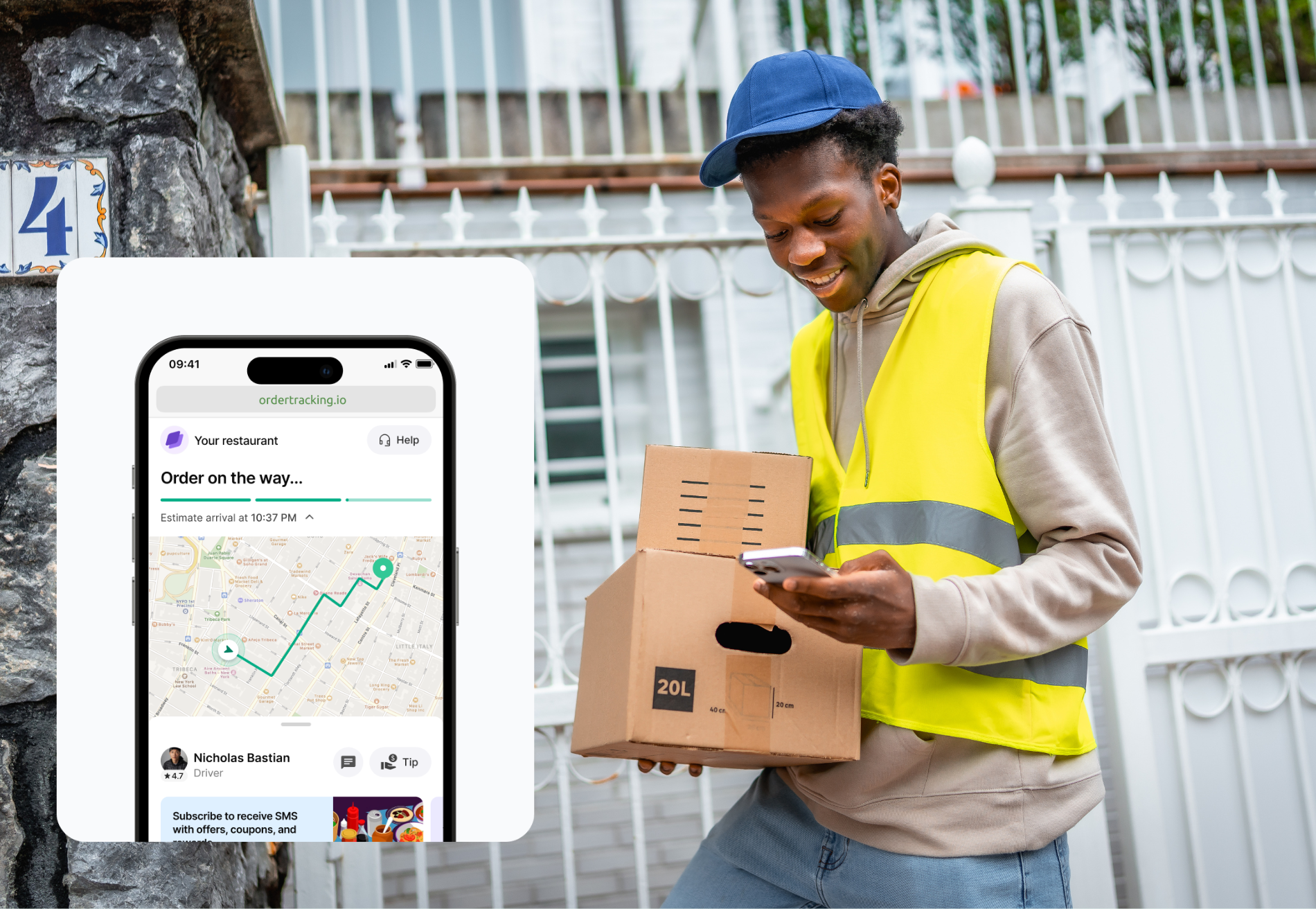
- Real-time tracking is the customer view, the link or notification that shows a recipient how close their order is and when it should arrive.
Not every delivery management platform offers both, and many platforms can do one well and the other poorly. The best tools for local delivery handle both real-time tracking and route visibility, so the dispatcher stays in control and the customer never needs to call to ask for updates.
What to look for in a tracking tool
Six things separate a platform that runs the day from one that only shows dots on a map. They are the criteria an owner or operations manager should weigh, and the ones each platform here is judged on.
- Live driver tracking. Continuous GPS location for every driver on a single dispatcher map, updated in near real time.
- Customer-facing tracking. A branded link or notification that shows recipients live driver location and an arrival estimate.
- ETA quality. How the platform calculates arrival times and whether it adjusts as conditions change during the route.
- Exception alerts. Notifications when a delivery runs late, a driver goes off route, or a stop fails, so dispatchers can react before the customer complains.
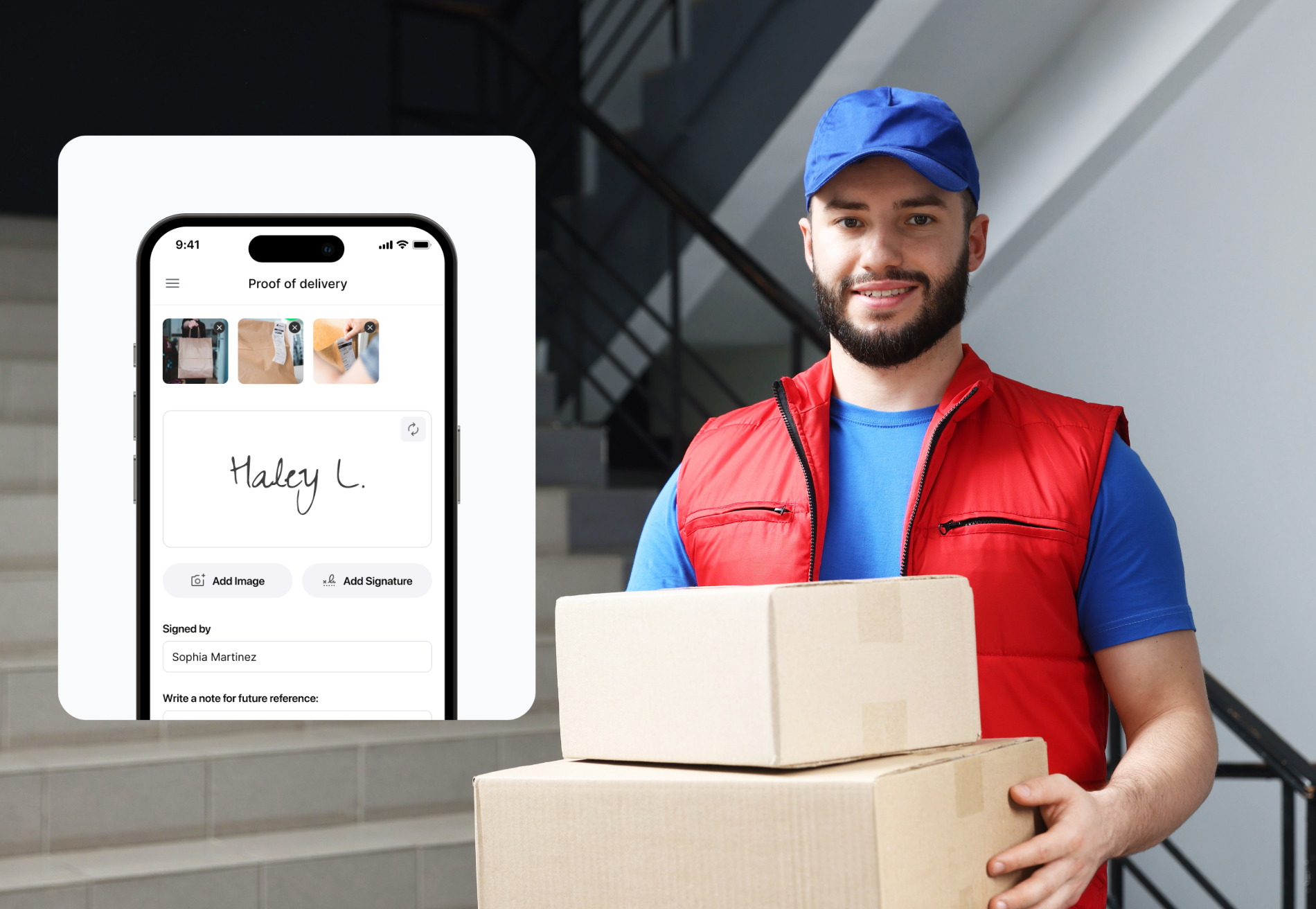
- Proof of delivery. Photo capture, signature capture, or barcode scanning that confirms each drop and settles disputes.
- Setup and ease of use. How fast a team without a dedicated IT department can get drivers live and start tracking.
The best delivery management platforms for real time tracking and route visibility
The table summarizes how each platform handles tracking and visibility. Pricing and features come from each vendor's own site and were last checked in June 2026.
Shipday
Shipday is the most affordable platform for a local operator who wants the full tracking stack. Real-time driver tracking and live customer ETAs are available from the entry level, with photo-and-signature proof of delivery included. Paid plans start at a $39 a month Professional plan that includes auto-dispatch and route optimization. Pricing is pay-as-you-grow: each plan includes a few hundred orders with a small per-order fee beyond that. There are no long-term contracts, and you can cancel anytime.
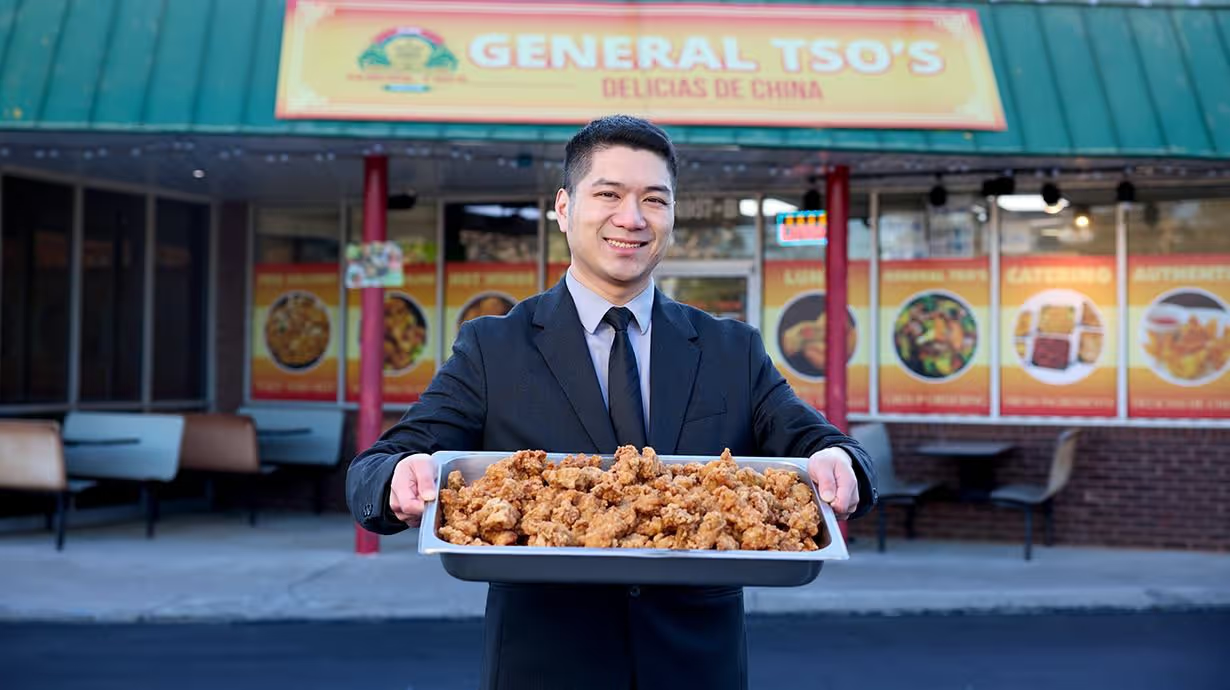
Drivers run a phone app with live location and route guidance, and customers get a tracking link with a live ETA, which cuts the "where is my order" calls that tie up the phone. Mr. G's Pizza, a single-location California pizzeria, credits Shipday with letting its customers track deliveries in real time. Fully branded tracking, with your own logo and no "powered by Shipday" badge, comes on Branded Premium ($79); DoorDash and Uber handoff is on Elite ($99), in the US, Canada, and Australia. Shipday fits own-fleet restaurants, couriers, grocers, and retailers that want customer-facing tracking without enterprise setup or pricing.
Onfleet
Onfleet pairs a live tracking map and a top-rated driver app with branded customer notifications. The platform is task-based: the Launch plan starts at $599 a month for 2,500 tasks with unlimited users, with a 14-day trial but no permanent free plan. SMS is billed separately per segment, and task overages add to the bill as volume grows, so model your real monthly cost before committing. Proof of delivery covers photo and signature capture, with barcode scanning on the higher Scale tier.
Onfleet holds a G2 rating near 4.6 (checked June 2026). Reviewers consistently praise the driver app and ease of setup, while the most common complaint is cost: the entry price is high for a small operation, and add-ons stack up. Onfleet fits growing delivery teams that run their own fleet and will use the driver-app quality enough to justify the spend.
Detrack
Detrack offers live vehicle tracking, branded customer notifications by SMS, WhatsApp, or email, and proof of delivery with photo, signature, and barcode scanning at a low per-vehicle price. Pricing starts at roughly $29 per vehicle per month, with a 14-day trial that unlocks all features and needs no credit card.
Detrack is strongest as an affordable, reliable tracking and proof-of-delivery tool. The tradeoff is depth: it is lighter on advanced route optimization than dedicated routing platforms, and reviewers who need complex routing or richer analytics tend to outgrow it. Detrack fits budget-conscious local fleets that want dependable tracking and proof of delivery without paying for routing they will not use.
DispatchTrack
DispatchTrack provides a real-time graphical dashboard, customer ETA notifications with delivery confirmation, and photo proof of delivery built for high-volume operations. It is built for appointment-based and big-and-bulky delivery, and is common in furniture, appliance, building supplies, and food distribution. Pricing is quote-based with an annual contract and no public tiers.
The recurring knock in reviews is routing rigidity: dispatchers report limited flexibility for manual route changes mid-day, and some find the mobile app dated. DispatchTrack fits large delivery operations that schedule complex, appointment-based drops where ETA accuracy and delivery windows matter more than lightweight setup.
Bringg
Bringg is an enterprise delivery orchestration platform with real-time driver tracking, branded customer tracking, and proof of delivery across owned fleets and more than 250 third-party carriers in 70-plus countries. It powers large retailers including Walmart and Coca-Cola and is built for multi-carrier coordination at scale. Pricing is custom, with a minimum annual commitment and implementation that runs weeks to months.
Reviewers note that the same flexibility that suits enterprises raises the bar for everyone else: setup is involved, getting full value tends to require dedicated technical resources, and there is no free trial to test it cheaply. Bringg fits enterprise operations that orchestrate many carriers, not single-fleet local teams.
FarEye
FarEye is an enterprise last-mile platform with real-time shipment visibility, a branded customer delivery experience, and dynamic constraint-based routing across a carrier network above 1,500. It serves large retail, ecommerce, and logistics brands, with named customers including Gordon Food Service and HelloFresh.
Pricing is custom-quoted, enterprise-level pricing. Many smaller teams report a longer onboarding process because the platform includes capabilities designed for large carrier networks. Reviewers describe a learning curve, and the system is built for organizations running many thousands of deliveries a day rather than a single local fleet. FarEye fits large multi-carrier freight and retail operations, and is more platform than most local delivery teams need.
How we evaluated
We compared six delivery management platforms on real-time tracking and route visibility for small and mid-sized local delivery operations. Features and pricing came from each vendor's own site and help documentation, checked in June 2026. Stated limitations reflect patterns across public customer reviews and each vendor's own product documentation, paraphrased rather than quoted.
How to choose for your operation
The right tool depends on five questions about your operation.
- Do you run your own drivers or many outside carriers? Single-fleet local teams fit Shipday, Onfleet, or Detrack. Multi-carrier orchestration fits Bringg or FarEye.
- What do your customers expect to see? If recipients want a live link and ETA, prioritize customer-facing tracking, where Shipday, Onfleet, and Detrack are strong.
- How many deliveries do you run a month? Under 300 orders fits Shipday's free plan. Higher steady volume on a premium platform points to Onfleet.
- How complex are your drops? Appointment-based, big-and-bulky scheduling points to DispatchTrack.
- How fast do you need to launch? Teams without IT support fit tools that go live in a day, such as Shipday or Detrack, over enterprise platforms like Bringg and FarEye that take weeks to months.
For many local delivery teams, Shipday combines these capabilities at a lower entry price than most alternatives.
Frequently Asked Questions (FAQs)
Which delivery management solution has the best real-time tracking for route visibility?
Shipday offers the best real-time tracking and route visibility for small and mid-sized local delivery teams, with a live dispatcher map and branded customer tracking on a free plan up to 300 orders a month. Enterprise fleets with many carriers are better served by Bringg, FarEye, or DispatchTrack.
What is the difference between route visibility and real-time tracking?
Route visibility is the dispatcher view that shows where every driver is and which stops are done. Real-time tracking is the customer view that shows a recipient the live location of their order and its estimated arrival.
Can these tools track third-party or gig drivers?
Shipday tracks in-house drivers and, on its paid tiers, can hand off to DoorDash or Uber drivers from one dashboard in supported regions. Bringg orchestrates more than 250 third-party carriers and FarEye more than 1,500. Onfleet and Detrack focus on tracking your own fleet.
How accurate are delivery ETAs?
ETA accuracy depends on live GPS and route data. Shipday, Onfleet, and DispatchTrack calculate arrival times from driver location and adjust as routes progress, which keeps customer estimates closer to reality than static time windows.
Bottom Line
For small and mid-sized local delivery teams that run their own drivers and want customers to see live tracking without enterprise setup, Shipday is the strongest fit on real-time tracking and route visibility. Large or multi-carrier operations should look to Bringg, FarEye, or DispatchTrack. If you run local delivery and want a live map and branded customer tracking today, try Shipday free.


.avif)
Índice
Artículos relacionados
¿Listo para empezar?
Juega primero con él, agrega tu equipo y paga después.


%201.svg)

.svg)