por Vahag Aydinyan10 min de lectura
Software de prueba de entrega: qué captura, qué protege y cómo se comparan las principales plataformas en 2026
Podrías perder un pedido de $180 por un contracargo solo porque faltaba la foto. Un pedido que tú y tu repartidor saben que se entregó. Olvida escanear una identificación y una entrega rutinaria de cerveza se convierte en una infracción. El software de prueba de entrega es tu protección contra errores y malos actores.
Este software existe para convertir cada entrega en evidencia, y hay muchísimas opciones que parecen hacer lo mismo pero, en realidad, son muy distintas de lo que sugiere su marketing. Esta guía explica qué captura la prueba de entrega, qué protege legalmente y cómo se comparan las principales plataformas.
¿Qué es el software de prueba de entrega?
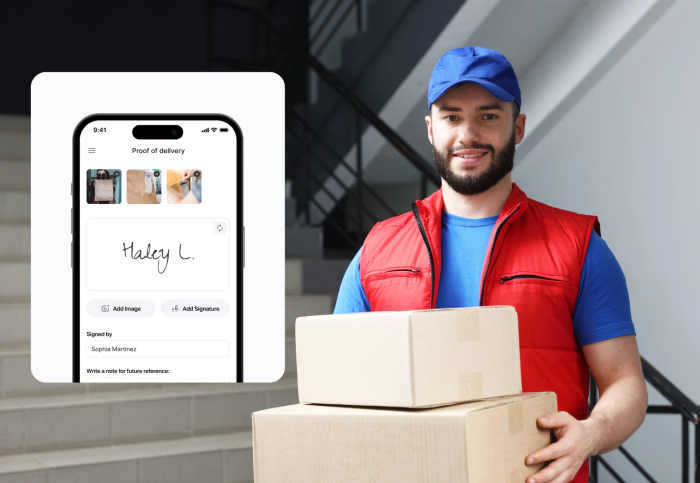
El software de prueba de entrega (POD) captura y almacena evidencia de que un pedido llegó a la persona correcta, en el lugar correcto y en el momento correcto. Es la versión moderna del viejo comprobante de entrega en papel: un registro digital, como una foto, una firma, una marca de tiempo con GPS o una verificación de identificación, que se guarda junto al pedido (y se puede consultar después). Cuando un cliente afirma que el pedido nunca llegó, o un banco abre una disputa, o un regulador audita una entrega de alcohol, el registro de prueba de entrega es el documento que lo resuelve.
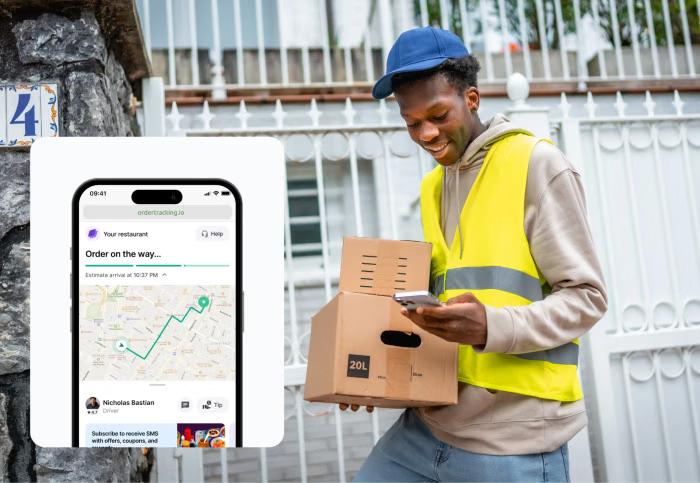
Lo que no es: seguimiento en tiempo real. Es una función completamente distinta. El seguimiento en vivo te dice dónde está un repartidor ahora mismo; la prueba de entrega te dice qué pasó cuando el pedido llegó. Un negocio puede tener seguimiento en tiempo real y aun así perder una disputa: sin un registro capturado en la puerta, simplemente no hay prueba.
Los cinco tipos de captura de prueba de entrega y cuándo se requiere cada uno
No existe una sola evidencia que sirva para todas las entregas. Una pizza dejada en la puerta no necesita la misma prueba que una caja de vino entregada en mano. La mayoría de los negocios necesita alguna combinación de estos cinco tipos de captura.
Captura de foto. El repartidor fotografía el pedido en el punto de entrega: en el porche, en la recepción, en el mostrador o en manos del cliente.
Las fotos funcionan mejor para entregas sin atención y sin contacto. Si un cliente dice que el pedido nunca llegó, la imagen muestra dónde lo dejó el repartidor. Eso sí, la foto debe ser útil. Una imagen borrosa de una bolsa en un pasillo oscuro prueba muy poco. La imagen necesita suficiente contexto para vincular el pedido con el lugar.
Firma electrónica. El destinatario firma en el teléfono del repartidor. La firma registra que una persona aceptó la entrega, lo que la hace útil para pedidos costosos, envíos empresariales y entregas que no pueden dejarse sin atención.
Una firma responde una pregunta distinta a la de una foto. La foto muestra dónde se dejó. La firma muestra que se aceptó.
PIN o código de un solo uso. El cliente recibe un código y se lo da al repartidor en la puerta. El repartidor ingresa ese código antes de completar el pedido.
Un PIN vincula la entrega con el cliente. Eso lo hace más sólido que una foto en la puerta cuando importa la identidad del destinatario, y es lo mejor para cosas como medicamentos con receta o productos de alto valor.
Marca de tiempo con geoetiqueta. La app registra la ubicación del repartidor y la hora exacta de finalización. Estos datos aparecen debajo del resto del registro de prueba de entrega y vinculan una foto o una firma con un lugar y un momento.
Una foto muestra lo que vio el repartidor. La geoetiqueta y la marca de tiempo muestran dónde y cuándo lo vio.
Verificación de identificación o edad. El repartidor revisa una identificación oficial antes de entregar el pedido. El proceso requerido cambia según la jurisdicción, la licencia, el producto y el modelo de entrega. El software debe marcar el pedido, exigir el paso requerido y registrar que la verificación se realizó.
¿La prueba de entrega resiste una disputa de contracargo?
Sí: la prueba de entrega es exactamente la evidencia que piden las redes de tarjetas y los procesadores, aunque no garantiza una "victoria". Cuando un titular de tarjeta disputa un cargo como "mercancía no recibida", el comercio responde mediante un proceso llamado representación: presenta evidencia de que el pedido se cumplió. Tanto Stripe como Square incluyen explícitamente la evidencia de entrega como documentación convincente.
La guía de disputas de Stripe indica a los comercios que respondan a un reclamo de producto no recibido incluyendo información de envío relevante, una foto de la entrega y la firma del cliente. Su guía más amplia de evidencia pide comprobantes de envío y entrega, incluida la dirección de entrega completa, no solo la ciudad o el código postal. El proceso de Square y los códigos de motivo de las redes de tarjetas pueden requerir evidencia distinta, así que la respuesta debe regirse por el motivo de la disputa y las instrucciones del procesador.
Un expediente de prueba de entrega útil puede incluir:
- El cliente y la dirección de entrega completa
- El número de pedido o de transacción
- El estado de entregado y la hora de finalización
- El repartidor asignado al pedido
- Una foto de la entrega o la firma del destinatario
- La ubicación
- Cualquier comunicación con el cliente
Un estado de "entregado" es una afirmación débil. Una foto vinculada a una dirección, un repartidor, una ubicación y una hora es evidencia sólida.
El motivo de la disputa también es importante. La evidencia que responde a un reclamo de mercancía no recibida no responde a todos los reclamos de transacción no autorizada. El registro también debe ser legible, estar vinculado a la transacción y estar disponible antes de la fecha límite de presentación.
¿Qué herramientas de prueba de entrega usan los distintos sectores?
Una pizzería tiene necesidades de prueba de entrega distintas a las de un dispensario. Y una florería probablemente no debería usar las mismas herramientas que una licorería.
| Sector | Métodos comunes de prueba de entrega | Qué aporta al registro |
|---|---|---|
| Restaurantes / QSR | Foto (sin contacto) o firma | Dónde se dejó el pedido o quién lo aceptó |
| Licores/alcohol | Verificación de identificación o edad (21+), firma | Que el repartidor completó el proceso de entrega requerido |
| Cannabis | Verificación de identificación o edad, firma, geoetiqueta | Una entrega documentada y un historial de auditoría |
| Farmacia | PIN/código de un solo uso o firma, a veces identificación | Que el pedido llegó al destinatario previsto |
| Florerías | Foto | Dónde se dejó una entrega perecedera o un regalo |
| Autopartes | Firma o foto | Que un pedido de mayor valor llegó al negocio |
| Mayoreo B2B | Firma, a veces PIN | Quién aceptó el envío y cuándo |
Estos son patrones operativos, no una declaración universal de la ley. Las reglas de entrega de alcohol, cannabis y farmacia varían según la jurisdicción y el tipo de licencia. Cada negocio debe confirmar las reglas que aplican donde opera.
El alcohol es quizá el mejor ejemplo de por qué el flujo de trabajo es tan importante. Un pedido puede entregarse en la dirección correcta y aun así entregarse de forma incorrecta. La plataforma adecuada puede identificar el pedido restringido, evitar que el repartidor omita la verificación requerida y conservar el registro resultante. Mira cómo Shipday estructura las operaciones de entrega con restricción de edad.
Cómo se comparan las principales plataformas de prueba de entrega en 2026
Las principales plataformas de prueba de entrega se diferencian sobre todo en los métodos de captura, la conservación de la evidencia, el acceso a la API y los modelos de precios. Sus listas de funciones pueden coincidir, pero su ajuste operativo coincide mucho menos.
| Plataforma | Tipos de captura de prueba de entrega | Acceso por API a los registros | Opciones de exportación | Precio (verificado el 17 ago 2026) |
|---|---|---|---|---|
| Shipday | Foto, firma electrónica | Sí (API disponible) | CSV, panel | Gratis (≤300 pedidos/mes); Professional $39/mes; Elite $99/mes |
| Onfleet | Foto, firma, código de barras | Sí (API robusta) | CSV, API | Launch ~599/mes (2,500 tareas); Scale 1,299/mes |
| Track-POD | Firma, foto, marca de tiempo, firma en pantalla | Sí | PDF por entrega, CSV | Advanced $59/repartidor/mes (mín. 3); Ultimate $99/repartidor/mes |
| Detrack | Firma, hasta 10 fotos, geoetiqueta, marca de tiempo | Sí (plan Advanced) | CSV, API | PRO $29/vehículo/mes; Advanced $39/vehículo/mes |
| Tookan | Código de barras, foto, firma, notas | Sí | CSV, API | ~$39/mes de entrada, hasta ~$499/mes |
| eLogii | Firma, foto, código de barras y conciliación | Sí | CSV, API | Cotización personalizada (sin precios públicos) |
El "ganador" aquí eres tú, el usuario. El mercado de software de prueba de entrega se compone de herramientas sólidas, cada una adecuada para necesidades distintas. Onfleet lidera en API y captura de códigos de barras, Track-POD en profundidad de prueba de entrega, Detrack en captura de fotos económica por vehículo, y Shipday gana en precio y plan gratuito, a costa de menos tipos de evidencia que los especialistas. La plataforma correcta es aquella cuyos tipos de captura se ajustan a tu producto y cuyos términos de almacenamiento y exportación coinciden con la forma en que realmente manejas las disputas.
Cómo los datos de prueba de entrega ahorran dinero y hacen responsables a tus repartidores
Cuando un cliente disputa un cargo, ya tienes lo que necesitas para demostrar que realmente se entregó. Los registros de prueba de entrega que incluyen fotos, marcas de tiempo y direcciones de entrega pueden ayudarte a recuperar dinero que de otro modo perderías frente a malos actores. El software ayuda a tu repartidor a capturar los datos correctos, para que evites el dolor de cabeza de tener que volver atrás y armar un caso semanas después de la entrega.
El software de prueba de entrega también es una herramienta integrada de responsabilidad y seguimiento del desempeño. Puedes revisarlo todo en la gestión de repartidores, y la mayoría de los repartidores se esmera más cuando sabe que registras cada parada.
Preguntas frecuentes
¿Qué es el software de prueba de entrega? El software de prueba de entrega es el registro digital de una entrega. Captura una foto, una firma, un PIN, una marca de tiempo con GPS o un escaneo de identificación y lo archiva junto al pedido para que puedas consultarlo después. Piénsalo como el recibo de la entrega. Cuando un cliente jura que su pedido nunca llegó, o un banco abre una disputa, ese archivo es lo que necesitas.
¿Cuál es el mejor software de prueba de entrega? El mejor software de prueba de entrega depende de lo que entregas y de cuánto entregas. Track-POD y Detrack son los más profundos en captura si la prueba de entrega es todo tu negocio. Onfleet está pensado para mayores volúmenes y tiene la API que los desarrolladores realmente valoran. Shipday es la opción si eres pequeño o estás empezando, ya que es gratis hasta 300 pedidos al mes. Elige según tu producto, no según la lista de funciones más larga.
¿La prueba de entrega resiste una disputa de contracargo?
Por lo general, sí. Stripe y Square consideran la evidencia de entrega cuando peleas un contracargo: una foto, una firma, la dirección completa, la hora de finalización, un pin de ubicación. Ese tipo de prueba inclina las probabilidades a tu favor. Aunque no ganará siempre. El motivo de la disputa sigue importando, y tu expediente debe ser legible, estar vinculado al pedido y presentarse antes de la fecha límite.
¿Cuál es la diferencia entre prueba de entrega con foto y con firma? Ubicación frente a aceptación. Una foto prueba dónde terminó el pedido, que es lo que quieres para entregas en el porche y sin contacto. Una firma prueba que una persona realmente lo recibió, que es lo que quieres para cualquier cosa costosa o que no puede quedarse en la puerta. Muchos negocios capturan ambas y obtienen la ubicación y la entrega en un solo registro.
¿Necesito prueba de entrega para la entrega de alcohol? Para el alcohol, casi siempre. Tu repartidor tiene que ver una identificación oficial válida y confirmar que la persona tiene edad suficiente antes de entregar la botella, y en muchos lugares también tiene que escanear o registrar esa identificación. Los detalles cambian según el estado y la licencia, así que revisa las reglas donde operas. El trabajo del software es marcar el pedido, evitar que el repartidor omita la verificación y conservar el registro si algún regulador lo pide.
¿Cuánto tiempo deben almacenarse las fotos de prueba de entrega? Al menos hasta que cierre tu ventana de contracargos, que por lo general es de 60 a 120 días, pero puede ser más. Guárdalas un año por seguridad, porque una disputa o una auditoría pueden llegar mucho después de la entrega. La mayoría de los proveedores no publica cuánto tiempo conserva realmente las fotos, así que pregunta desde el principio. Algunos las eliminan antes de que surjan tus disputas, y es una mala sorpresa descubrirlo en medio de una.

Escribo sobre marketing de contenidos, tendencias de marketing, tecnología para restaurantes, consejos para administrarlos y más.